Last updated November 23, 2026
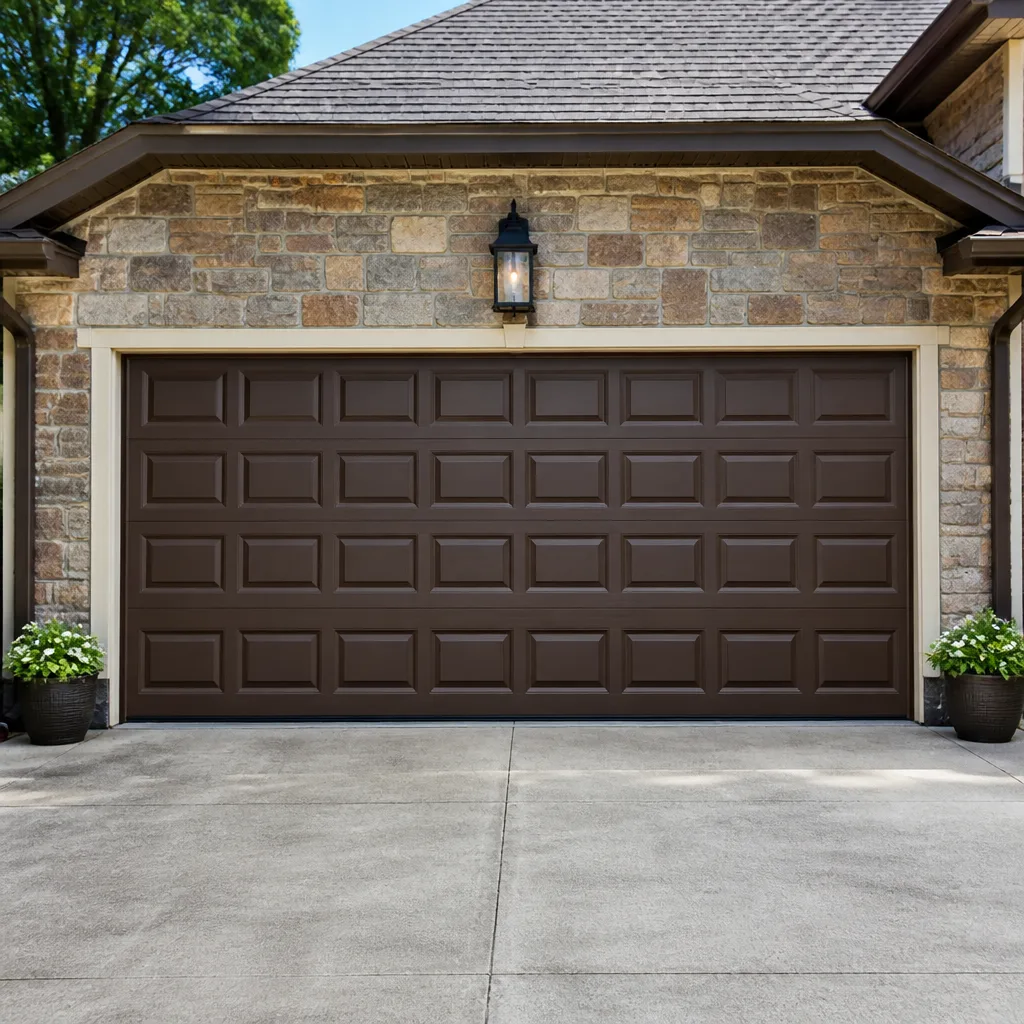 Raised-panel steel
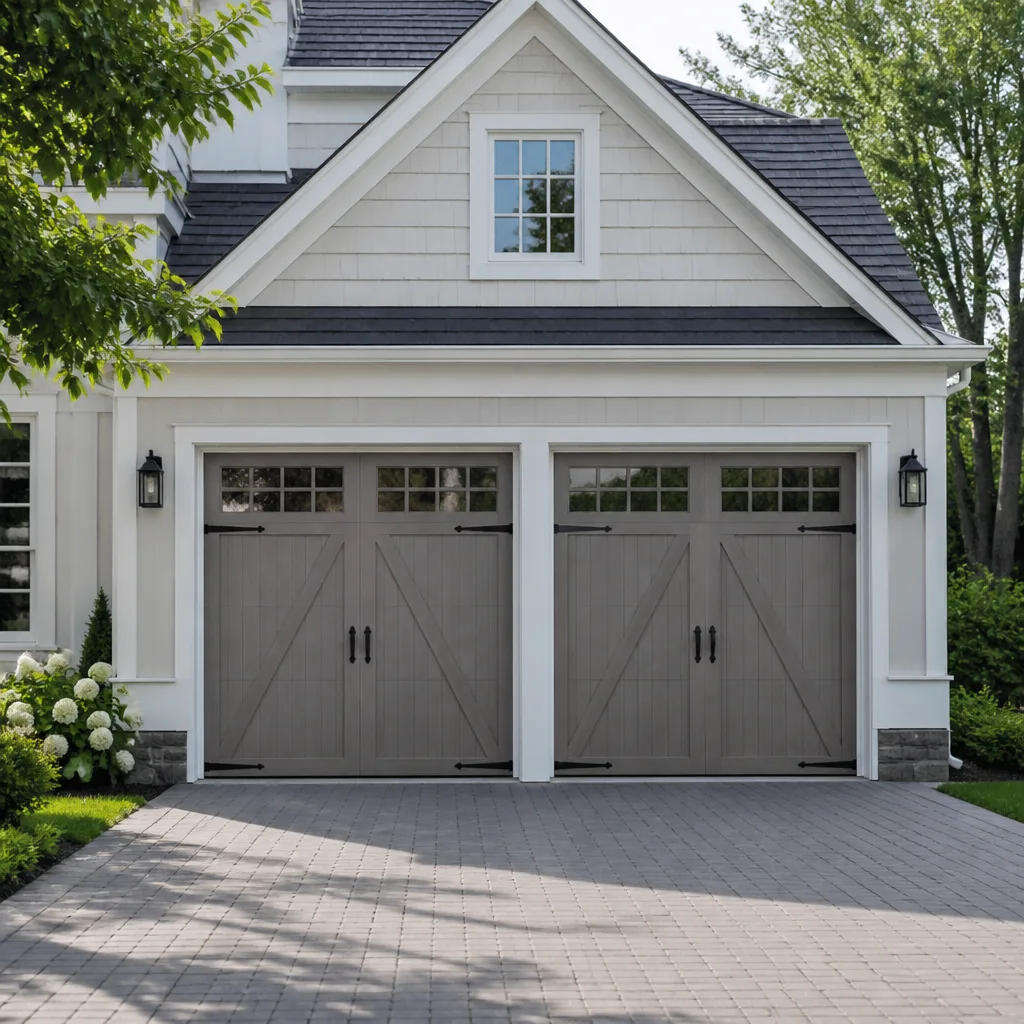 Carriage house
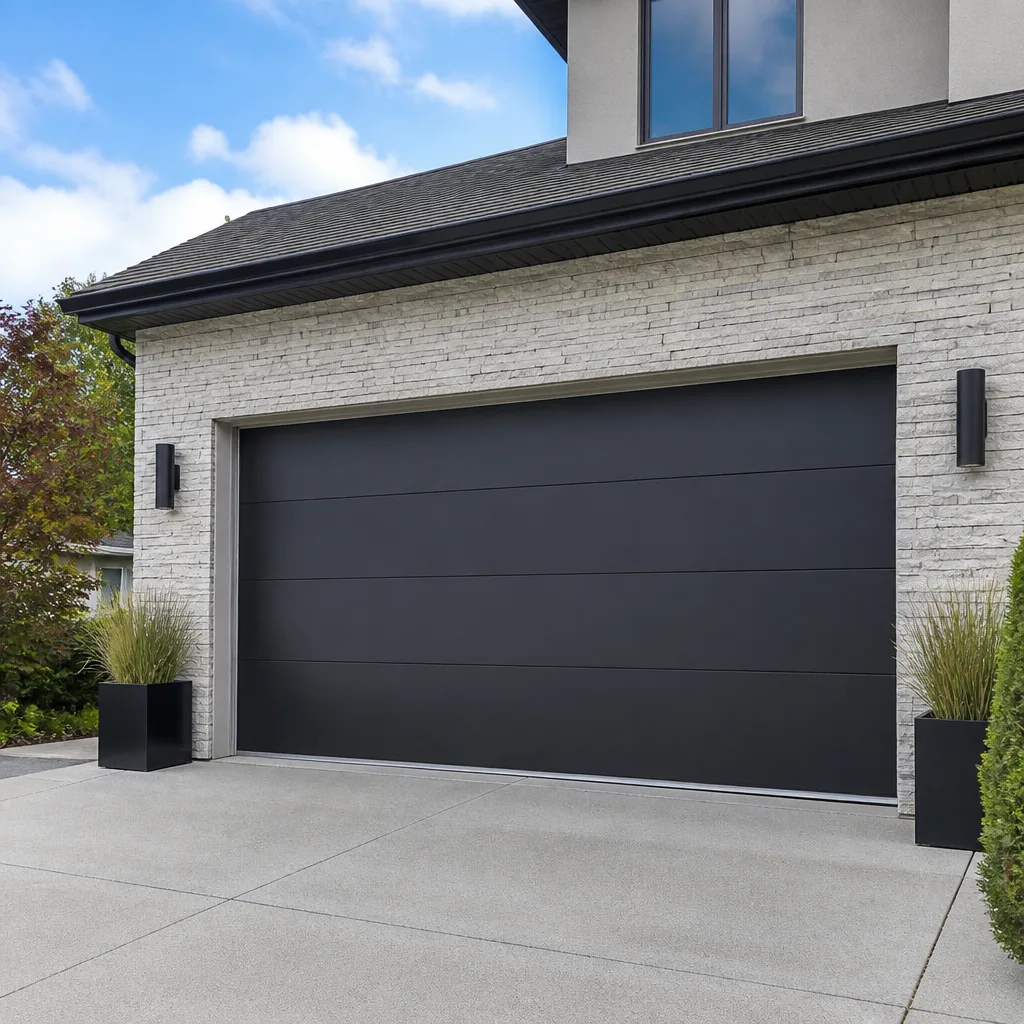 Modern flush
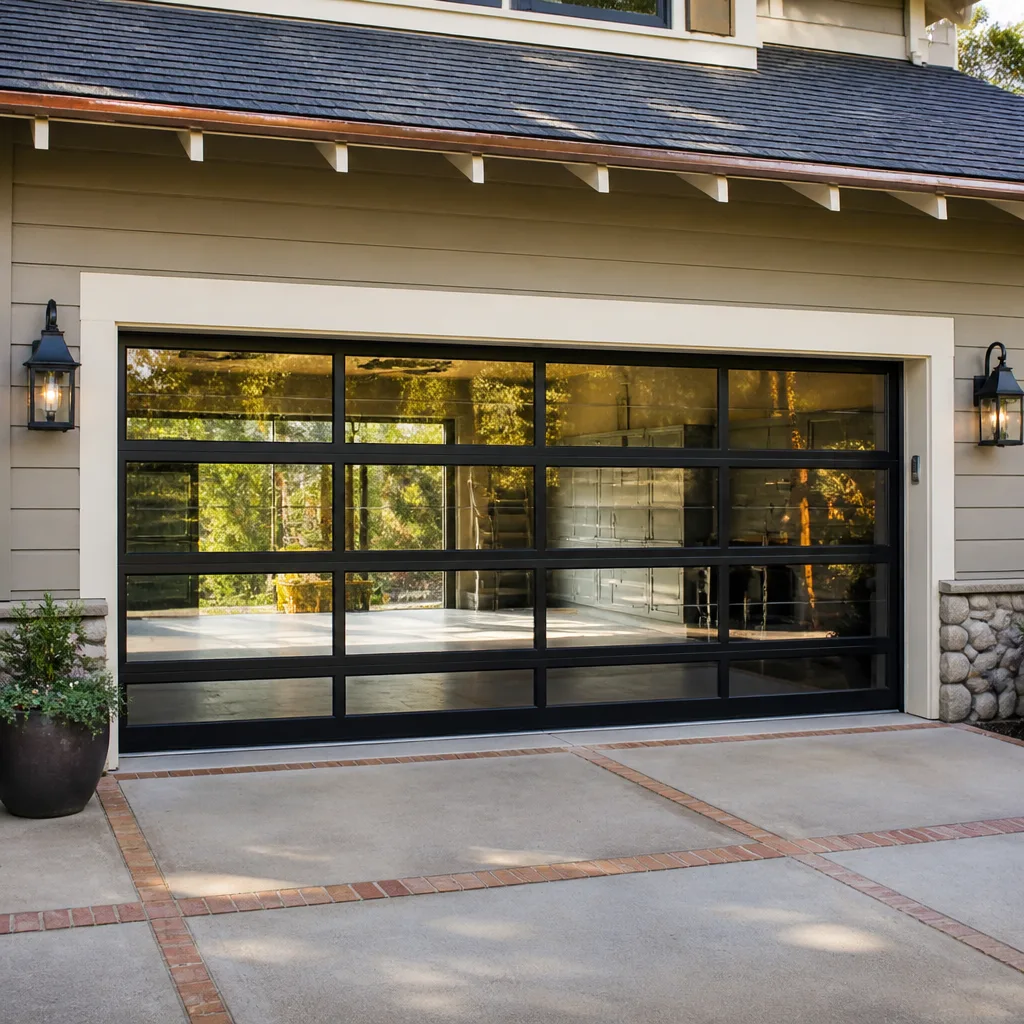 Full-view glass
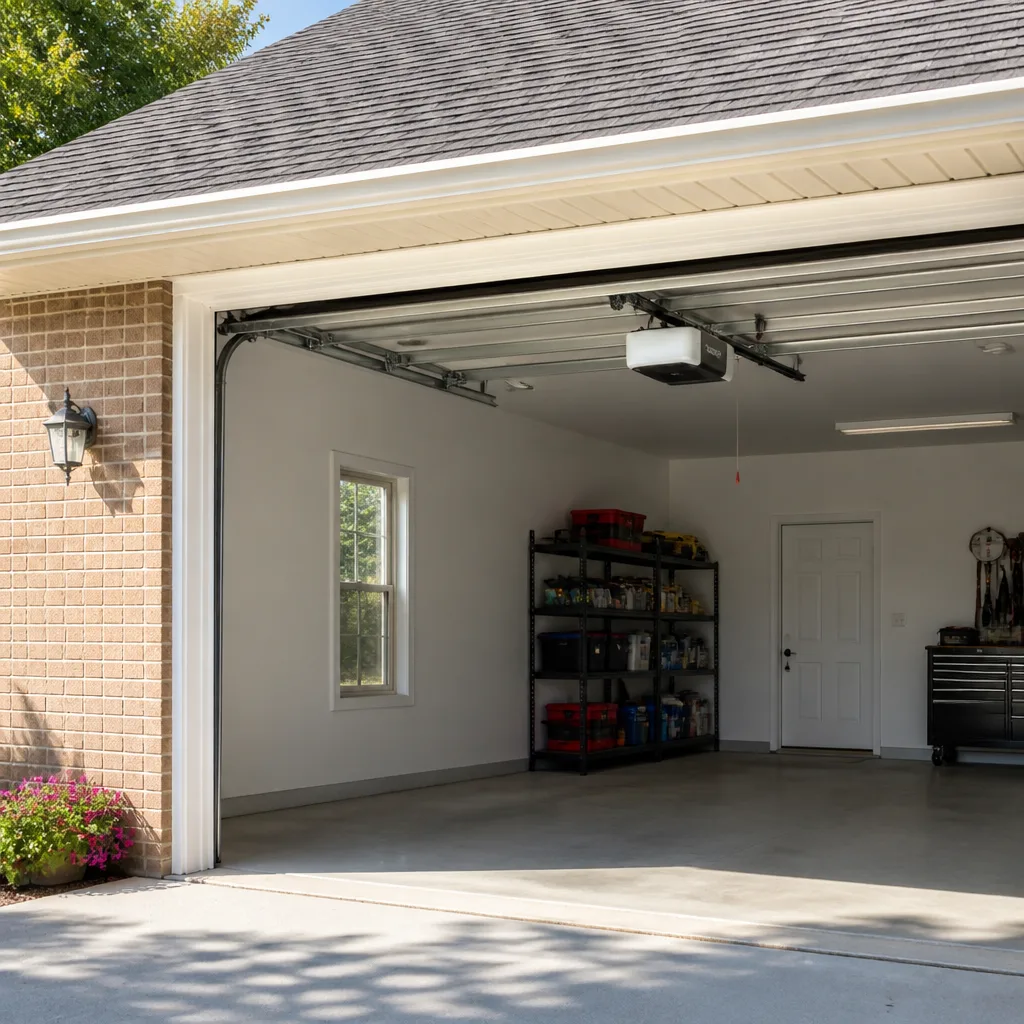 LiftMaster openers
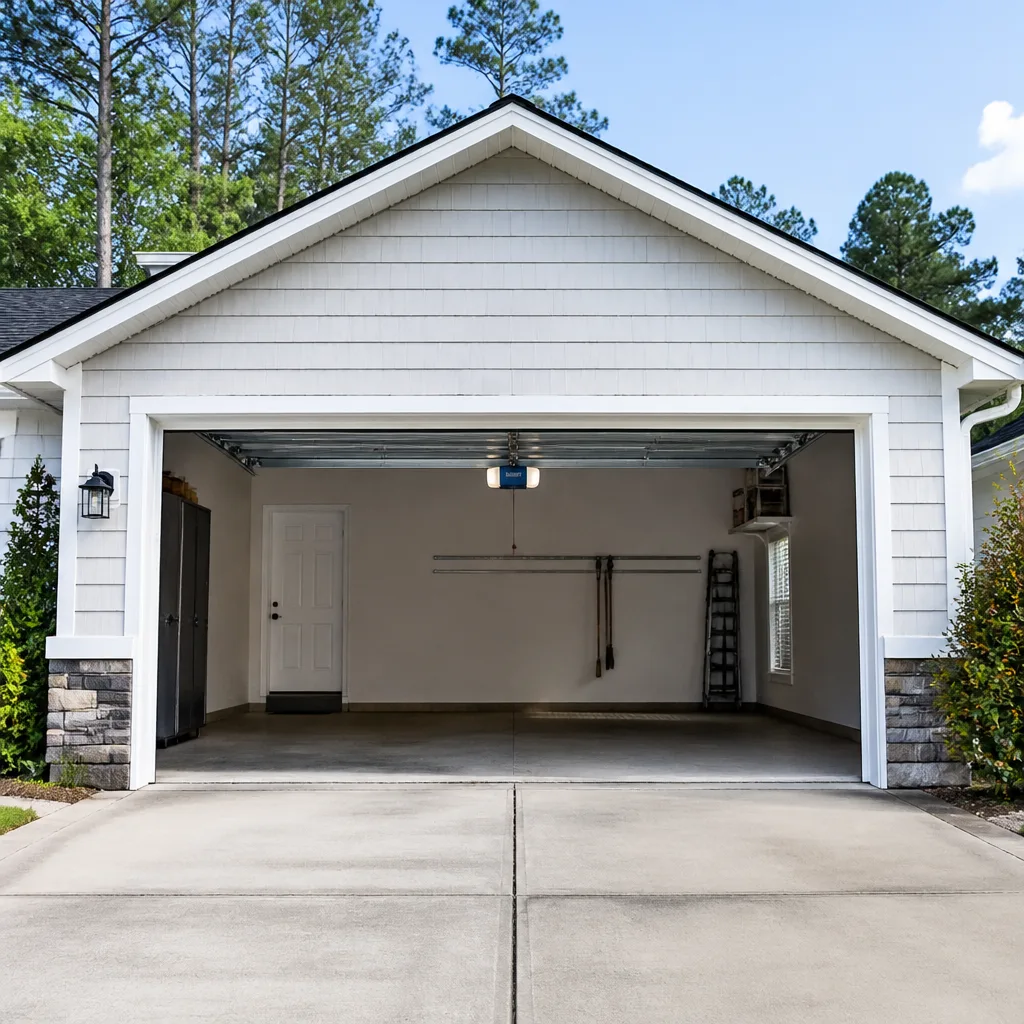 Chamberlain openers
Full 25-point door and opener safety check with every visit - springs, cables, rollers, tracks, and your LiftMaster or Chamberlain opener included
You get a price before we start. It does not change when the pro arrives.
Get your free estimateSeasonal Garage Door Care for Levittown: Year-Round Homeowner’s Guide
January is when we field the most emergency calls in Levittown. But the spring failures behind those calls almost always began in October, when the grease on the cables was still warm and everything seemed fine. Cold doesn’t create problems so much as it exposes them. A torsion spring that’s a few cycles from snapping, a hinge that’s loosened a quarter turn, a bottom seal that’s gone brittle – all of it hides through a mild fall and announces itself the first week the temperature drops below freezing. This guide walks you through what actually happens to a garage door in Levittown across all four seasons, and what to check before each one arrives.
Quick Answer
Seasonal garage door care in Levittown means matching your maintenance to the climate: tighten hardware and lubricate moving parts before the first freeze, watch your opener’s behavior in cold snaps, inspect for rust and panel warping after winter, address humidity and heat-related opener issues in summer, and brace or reinforce the door ahead of nor’easter season. The single most valuable habit is a pre-winter inspection each fall, because cold-weather spring failures are the most common and most dangerous emergency we see. Everything else on this checklist is cheaper to handle than a failed spring in January.
Styles & brands we work with
- Raised-panel steel
- Carriage house
- Modern flush
- Full-view glass
- LiftMaster openers
- Chamberlain openers
Table of Contents
- Why Levittown’s Climate Is Hard on Garage Doors
- Fall: Preparing for the Freeze-Thaw Cycle
- Winter: Openers, Springs, and Frost-Heaved Driveways
- Spring: Post-Winter Inspection Checklist
- Summer: Humidity, Wood Panels, and Thermal Cutout
- Nor’easter Prep: Wind Loads and Bracing
- The Spring Problem: Why It’s Not a DIY Job
- A Simple Year-Round Schedule
Why Levittown’s Climate Is Hard on Garage Doors
Garage doors are built to last, but they’re built for a generic climate. Levittown doesn’t give them one. The South Shore sits in a humid continental zone with a coastal edge – humid summers that push relative humidity high for weeks, winters that swing above and below freezing repeatedly, and nor’easter wind events that load the door face far beyond a normal day’s stress. That combination produces four distinct seasonal failure modes, and each one hits a different part of the door.
Understanding the mechanism matters more than memorizing a checklist. Here’s what each seasonal stress actually does:
- Freeze-thaw cycles expand and contract metal hardware, slowly loosening bolts and changing torsion spring tension. Water that seeps into seams and freezes splits them apart.
- Humid summers swell wood and wood-composite panels, which then bind in the tracks and warp out of alignment.
- Cold snaps thicken lubricants, stiffen seals, and reduce the mechanical advantage your opener needs to lift the door.
- Nor’easter wind loads put pressure on the door face that a standard residential door isn’t always braced to handle.
Levittown’s housing stock makes this more relevant than it might be elsewhere. Many homes here were built in the postwar decades with original or early-replacement doors, and older doors are more sensitive to temperature swings than modern insulated ones. Whether you’re in the Levittown neighborhoods near the Wantagh Parkway or off Hempstead Turnpike, the seasonal pattern is the same – and so is the fix.
Fall: Preparing for the Freeze-Thaw Cycle
Fall is the most important season for garage door maintenance in Levittown, and it’s the one homeowners skip most often. The work you do in October and early November determines whether your door sails through January or calls for help. This is the season to tighten, lubricate, and replace before cold weather locks everything in place.
What to tighten
Walk the door and check every bolt on the hinges, the track brackets, and the roller carrier. Metal hardware expands in summer heat and contracts in cold; over a season of daily cycles, bolts back out slightly. A quarter-turn on a loose hinge bolt now prevents a hinge from separating under load in February. Check the lag bolts that anchor the track brackets to the wall too – those are the ones that fail first when the wood frame dries and shrinks.
What to lubricate
Use a lithium-based or silicone lubricant on the hinges, rollers, and springs – not WD-40, which is a solvent and not a lasting lubricant. The goal is a thin protective coat that stays pliable in cold. Grease that’s too thick turns to paste below freezing and actually increases the load on the opener. Apply in warm weather so it penetrates, then wipe off the excess so it doesn’t collect grit. Lubricating the torsion spring coils and the cable drums is part of this job, and it’s one of the cheapest ways to extend spring life.
What to replace
Inspect the bottom seal and the weatherseal around the door perimeter. Rubber that’s cracked or brittle in fall will be rigid and leaking by winter. Replace it before the cold sets in. Also look at the rollers – nylon rollers that are worn flat or have chips should be swapped now. Nylon is quieter than steel but fails faster in temperature swings.
Why torsion spring tension changes in cold
A torsion spring is a coiled steel torsion bar under constant load. Cold steel becomes less ductile, which means the same spring carries the same load with less give. Combined with thickened lubricant and a stiffer seal, the door needs more force to move in January than it did in September, and the spring is doing more of that work while being more brittle. That’s the mechanism behind the January emergency calls. A spring that’s near the end of its cycle count will often fail on the first genuinely cold morning. If you’ve noticed your door feeling heavier or your opener working harder in fall, that’s the signal to have the springs checked before winter arrives. Our garage door spring repair service starts with a measurement of remaining tension, not a sales pitch.
Winter: Openers, Springs, and Frost-Heaved Driveways
Winter is when Levittown garage doors are tested most. Cold alone is manageable; cold combined with a door that wasn’t prepped in fall is where problems concentrate. Three issues dominate: opener torque loss below 20°F, spring failure, and the bottom seal problem created by frost-heaved driveways.
Why openers lose torque below 20°F
Electric motors produce less torque in cold because the lubricant inside the gearbox and along the drive mechanism thickens. At the same time, the door itself is stiffer – seals are rigid, rollers drag, springs are less responsive. The opener is asked to do more while delivering less. On a well-maintained door with a properly balanced spring system, the opener barely notices. On a door that’s out of balance, that gap is what burns out a motor or strips a gear.
How to spot a straining motor
You can usually hear and see the warning signs before a failure. Watch for these:
- The door moves slower on the way up than it did in fall, or hesitates at the start.
- The opener motor sounds louder or higher-pitched than usual in cold weather.
- The door reverses partway up on its own, or stops before fully opening.
- You see the light flicker or dim when the opener starts.
- The manual release has to be pulled because the opener won’t complete the cycle.
If the belt or chain is straining and the door feels heavy when you lift it by hand (with the opener disengaged), the problem is the door’s balance, not the opener. Forcing it just wears out the motor. LiftMaster and Chamberlain openers in particular have internal travel-limit and force settings that can mask a developing imbalance – the opener “learns” to push harder until it can’t. If you’re hearing any of these symptoms, our garage door opener repair service begins with testing the door’s balance before we touch the opener.
The bottom seal on frost-heaved driveways
Levittown’s freeze-thaw cycle lifts and shifts concrete. A driveway that was level in October can have a raised slab or a crack by January, and the garage door’s bottom seal is designed for a flat threshold. When the slab heaves, the seal either hangs up on the high spot or leaves a gap under the low spot. Gaps let cold air, snow, and small animals in. Hanging up stresses the opener. The fix is either adjusting the bottom seal or the door’s closed position, or in some cases installing a threshold seal designed for uneven concrete. Don’t ignore a gap that appears after the first hard freeze – it will get worse.
Spring: Post-Winter Inspection Checklist
Spring in Levittown is the season of discovery. The damage that accumulated through winter becomes visible once temperatures stabilize, and a door that “made it through” often has issues that won’t show until next season. Use the first warm weeks for a thorough inspection.
Post-winter inspection checklist
- Check cable drums for rust. The drums at the top of the door where the cables wind are prone to rust in humid climates, and rust on the drum means the cable can slip or fray. Look for orange dust or pitting on the drum surface, and inspect the cable itself for broken strands anywhere along its run.
- Look for door panel warping from moisture. Wood and wood-composite panels absorb moisture through winter and swell. Run your hand along the bottom edge of each panel and check for separation or a wavy surface. Warped panels can bind in the tracks and put uneven load on the springs.
- Inspect weatherseal compression. The weatherseal around the sides and top of the door should compress evenly against the frame when the door closes. Seal that’s flattened, torn, or leaving light gaps needs replacement.
- Test the door’s balance. Disengage the opener, lift the door halfway, and let go. A balanced door stays put. A door that drops or rises on its own is out of balance and needs spring adjustment.
- Test the safety reverse. Put a piece of wood or a roll of paper towels on the floor under the door and close it. The door should reverse on contact. Test the photo-eye sensors too by blocking the beam with the door open and confirming it won’t close.
- Check all hardware. Re-tighten bolts loosened by winter’s temperature swings, and look for stress cracks in hinges and brackets.
- Clear the tracks. Winter grit, road salt, and debris collect in the tracks. Wipe them clean with a damp cloth and check that the door rolls smoothly by hand.
Any single item on this list is manageable. The danger is accumulation – a door with a slightly heavy spring, a slightly dragging roller, and a slightly warped panel asks the opener to do more than it was set up for, and that’s how failures build. A proper garage door repair inspection in spring catches all three before they compound.
Summer: Humidity, Wood Panels, and Thermal Cutout
Levittown summers are muggy, and that humidity has a direct effect on the door material and the opener electronics. The two most common summer issues are wood panel swelling and opener thermal cutout during heat waves.
How humidity affects wood and wood-composite panels
Wood and wood-composite garage doors are essentially living materials in a humid climate. They absorb moisture from the air, swell, and then shrink again when the air dries. Over a summer, that swelling can push panels into the tracks so the door drags, or open small seams at the joints between panels. A wood door that hasn’t been sealed in a few years will take up more moisture and warp more aggressively. If your door is wood, check the finish each summer and reseal if it’s worn thin. Wood-composite doors are more stable but still susceptible at the bottom edge where moisture collects from a wet driveway. The fix in both cases is to keep the bottom edge painted or sealed and to catch any swelling early, before it permanently deforms the panel.
Opener thermal cutout in heat waves
Garage openers have a thermal protection circuit. When the motor gets too hot, it shuts off and won’t respond until it cools down – usually within a few minutes to half an hour. In normal conditions this only trips on a door that’s out of balance or during heavy repeated use. During a heat wave with a garage that gets full afternoon sun, it can trip more easily. If your opener quits mid-cycle and then works again later, thermal cutout is a likely cause. That’s not a failure, but it’s a symptom worth investigating – a properly balanced door with a healthy opener shouldn’t trip thermal protection on ordinary use. If you’re seeing it repeatedly, the opener may be working too hard, and a technician should check the balance and force settings. Craftsman and Raynor openers have distinct thermal behaviors worth knowing, and a tech familiar with the brand will diagnose it faster.
Nor’easter Prep: Wind Loads and Bracing
Nor’easters are a recurring feature of the Levittown climate, and a garage door is often the largest wall opening on a home’s windward side. Wind load ratings describe how much pressure a door is designed to withstand, and a standard residential door is typically rated for the moderate wind pressure a typical storm delivers – not the extremes of a strong nor’easter. Understanding what your door is rated for is the first step.
Wind load ratings explained
Garage doors are tested and rated for wind pressure at specific wind speeds, and the rating appears on the door’s label. A door rated for a lower wind speed will flex and deform under heavier pressure, and a deformed door can come out of its tracks – or in the worst case, fail completely. If your door doesn’t have a visible rating label or you’ve never checked it, that’s worth locating before storm season. A technician can tell you what your existing door is rated for and what reinforcement would raise that rating.
Which bracing kits actually help
Not all bracing is equal, and some “reinforcement” products do more for the manufacturer’s sales than for the door’s strength. What actually helps:
- Horizontal reinforcement struts across the door face, sized to the door’s width, address the panel flex that causes track failure in wind.
- Vertical stiles added to wide doors distribute pressure to the hinges and rollers more evenly.
- Heavier-gauge hinges and stronger roller carriers prevent the hardware from separating under load.
- Proper track anchoring – reinforcing the brackets that hold the track to the wall – matters as much as anything on the door itself.
What doesn’t help: adding a single strut to a door that’s already under-width for its span, or bracing one side of a double-wide door. A bracing kit has to match the door’s width and panel count to be effective. If you’re unsure, get an inspection before storm season rather than a generic kit from a home improvement store.
The Spring Problem: Why It’s Not a DIY Job
Torsion and extension springs are the most mechanically dangerous parts of a garage door. A torsion spring stores enough energy to launch a door panel across a garage, and an extension spring that’s been improperly secured can release that energy in an instant. This is why spring repair is called out as a standalone specialty across the trade – it’s the repair most often botched by homeowners, and the one with the most serious consequences.
We’re not going to walk you through the procedure. Store-bought spring kits and online tutorials understate the danger, and a spring that’s been installed with the wrong tension, the wrong wind direction, or without the correct winding bars isn’t just a problem – it’s a loaded hazard that will fail at the worst possible moment. The wind on a torsion spring is measured in quarter turns, and getting it wrong loads the door unevenly, which damages the cables, the drums, and eventually the panels.
What you can safely do is recognize the warning signs that a spring needs attention:
- A loud bang from the garage, followed by the door not opening or opening only a few inches.
- The door feels unusually heavy when you lift it by hand (with the opener disengaged).
- A visible gap in the torsion spring coil, or the spring looks stretched or unwound.
- The door opens crookedly, with one side ahead of the other.
- The opener struggles, strains, or trips its safety reverse on the way up.
Any of these is a call-a-professional signal. Garage Door Repair Levittown Pros handles spring repair as a dedicated service, with the tension measured and set correctly for your door’s weight and cycle count, and our technicians have up to 9 years of experience. Our garage door spring repair page has more detail on how the diagnosis works.
A Simple Year-Round Schedule
You don’t need to remember every item in this guide. A short seasonal routine covers the important parts. Here’s a schedule that maps to the Levittown climate:
- Early fall (September-October): Tighten all hardware. Lubricate hinges, rollers, springs, and cable drums. Inspect and replace weatherseal and bottom seal. Test door balance. This is the highest-value maintenance window of the year.
- Late fall (November): Check the opener’s force and travel settings. Clear any debris from the tracks. Make sure the garage is sealed against cold air infiltration.
- Winter (December-February): Listen for a straining opener, watch for a door that reverses or hesitates, and check the bottom seal against the driveway for gaps as frost heaves the concrete.
- Spring (March-April): Run the full post-winter checklist: cable drums, panel warping, weatherseal compression, hardware, and a safety reverse test.
- Summer (June-August): Check wood door finish and bottom edges for moisture. Watch for opener thermal cutout on hot days and investigate repeated trips.
- Before storm season: Confirm your door’s wind load rating and inspect bracing, hinges, and track anchoring.
Beyond the seasonal list, a quick monthly walk-around catches problems early. Look at the door, listen to it move, and note anything that changed. A door that’s gotten louder, slower, or jumpier over a month is telling you something.
Common Mistakes to Avoid
- Waiting until January. Spring failures don’t happen in January – they happen in October and go unnoticed until the cold makes them fail. Schedule pre-winter maintenance before the first freeze, not after.
- Using WD-40 as a lubricant. It’s a solvent, not a lasting lubricant, and it strips the grease that’s protecting your hinges and rollers. Use a lithium or silicone lubricant instead.
- Forcing a struggling opener. When the opener strains in cold weather, the temptation is to hold the button and let it work harder. That burns out the motor. A struggling opener is a signal to check the door’s balance, not to override it.
- Ignoring a small seal gap on a heaving driveway. A gap that appears after the first frost will let in cold air, snow, and small animals, and it will widen through the winter. Address it early.
- Buying a generic bracing kit for storm prep. A bracing kit that doesn’t match your door’s width and panel count isn’t reinforcement – it’s cosmetic. Get the door’s wind rating checked and install the right reinforcement.
- Attempting spring repair. A torsion spring holds enough stored energy to seriously injure you. This is the one repair in the trade that should never be a weekend DIY project.
- Skipping the safety reverse test. The door’s safety reverse and photo-eye sensors are the most important safety feature on the system. Test them at least twice a year, especially after weatherseal or hardware changes.
See the difference
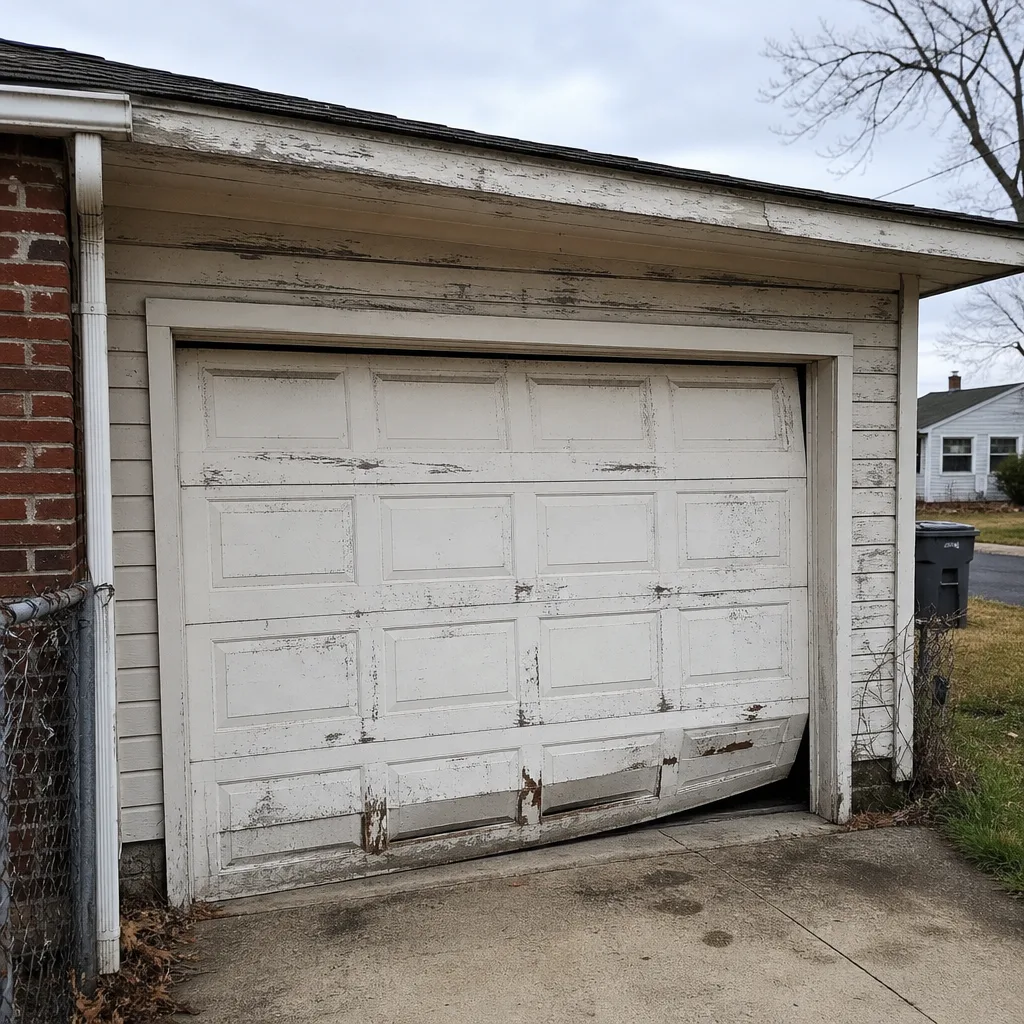 Before
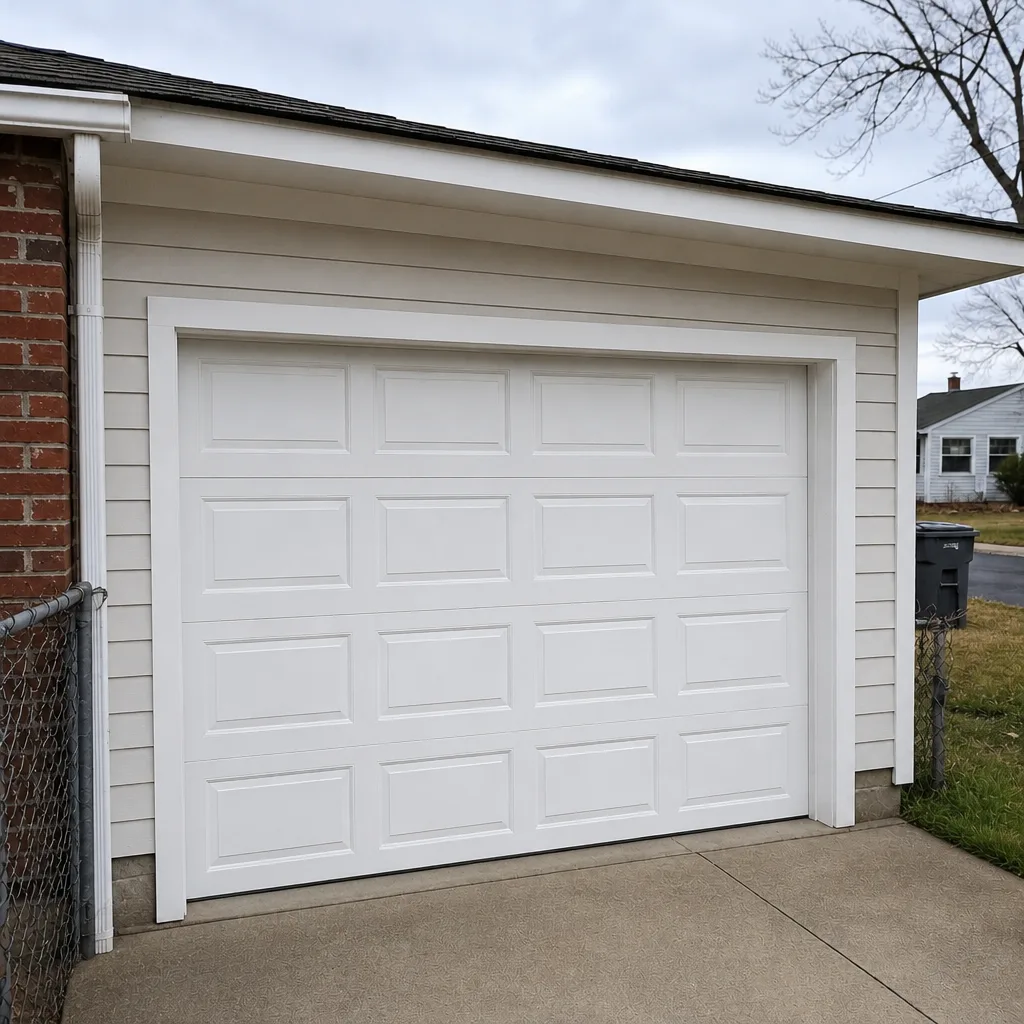 After
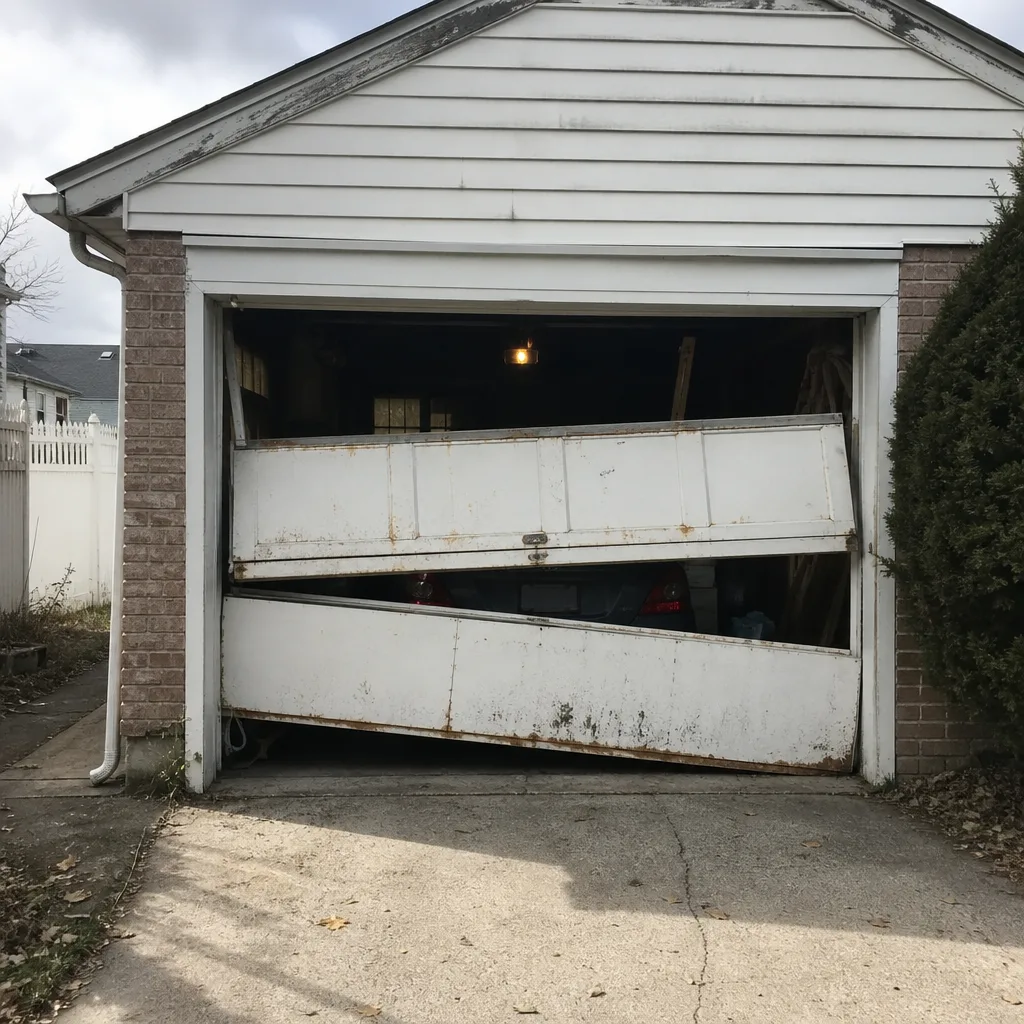 Before
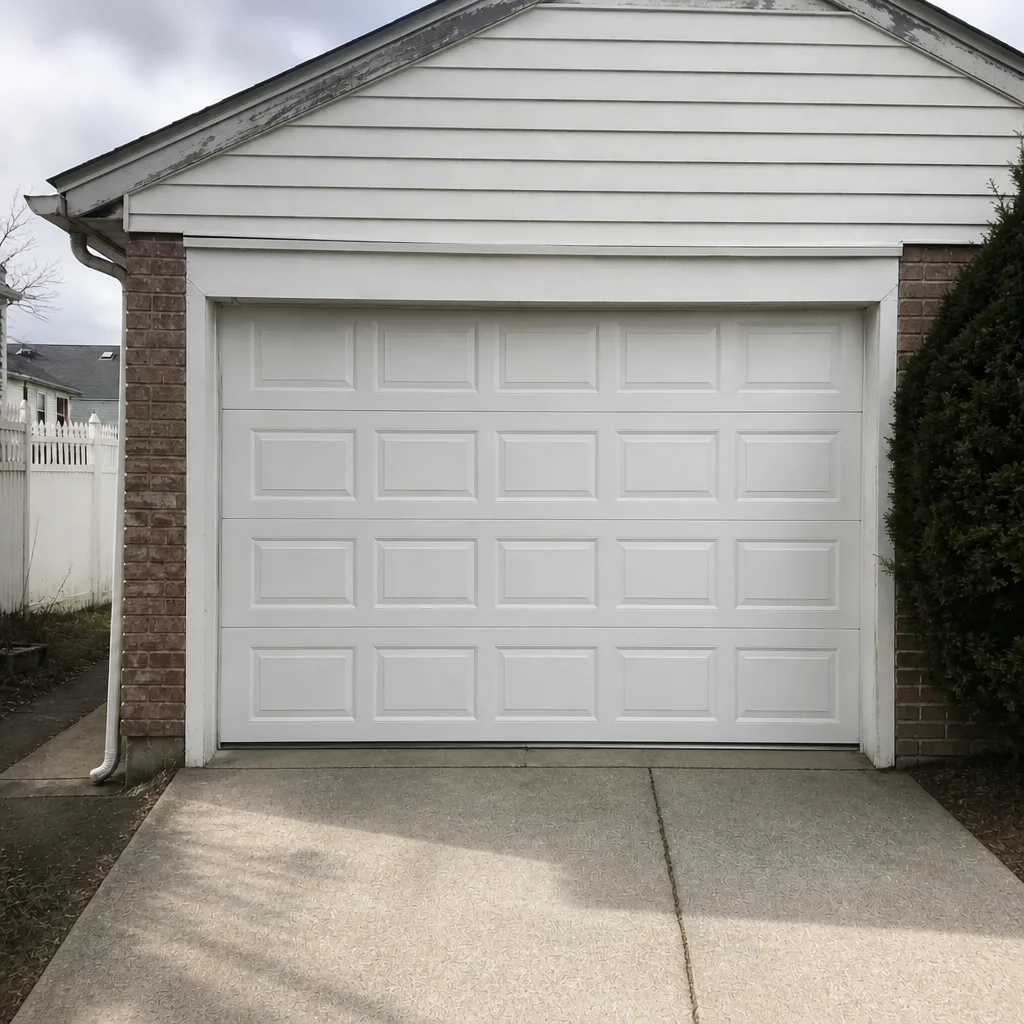 After
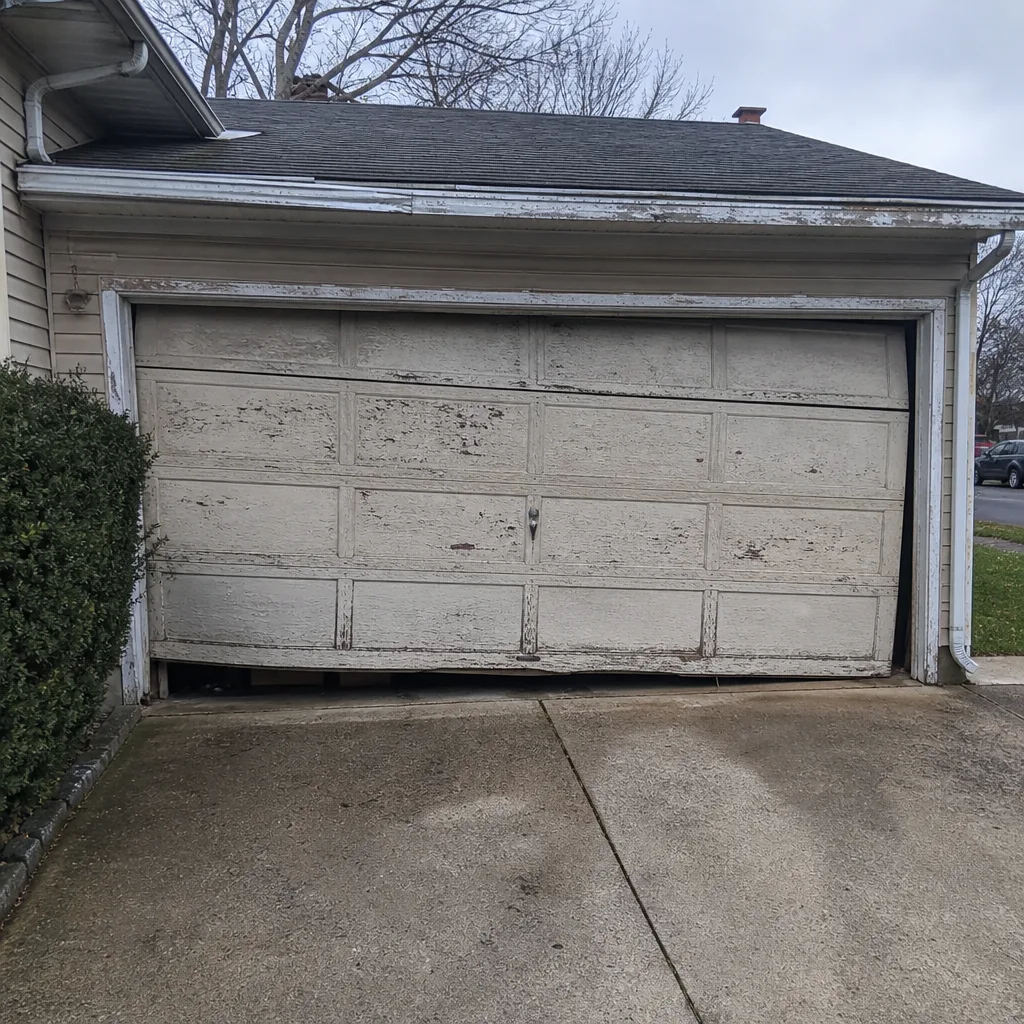 Before
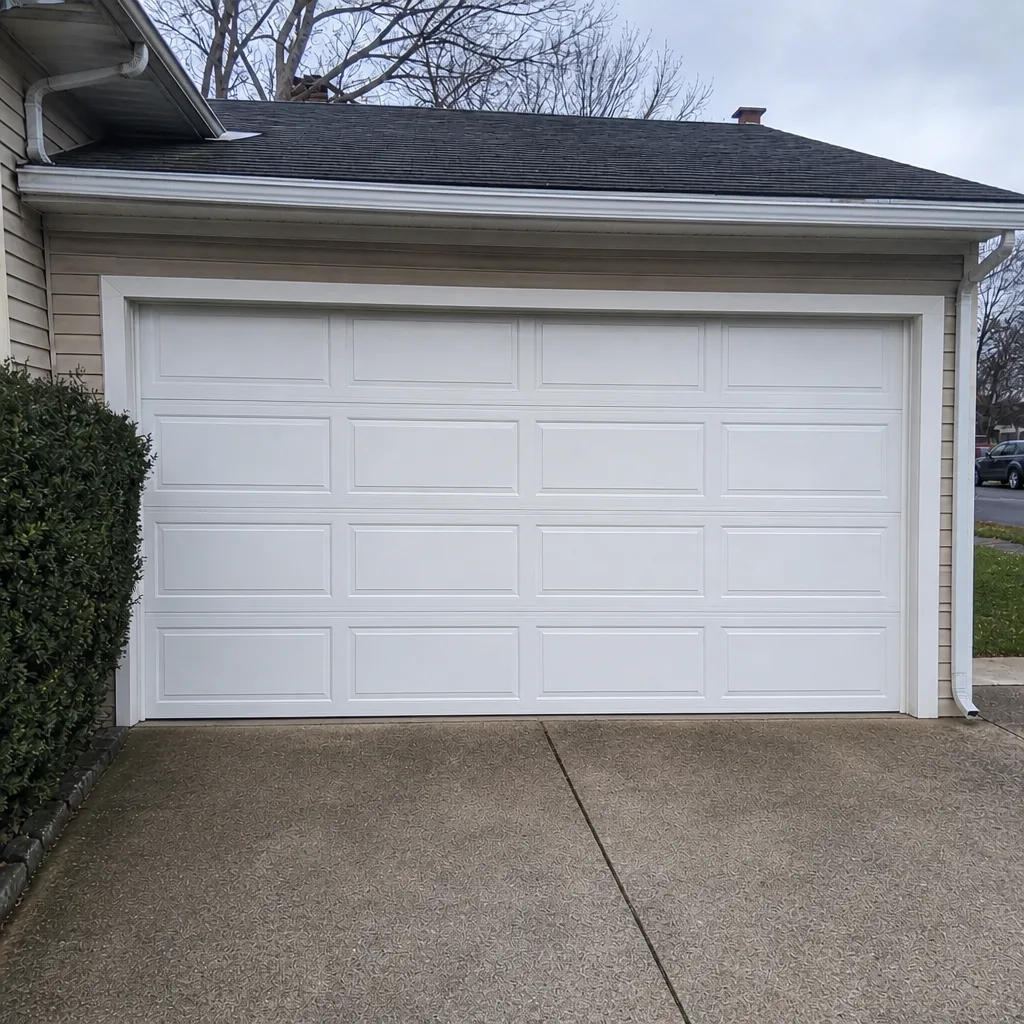 After
When to Call a Professional
Some garage door issues are manageable yourself; others aren’t. Call a professional when a spring has failed or looks suspect, when the door is out of balance or opens crookedly, when the opener struggles repeatedly or trips its thermal protection, when the cables are frayed or the drums are rusted, or when a door has been damaged by wind or impact. Any of these involves stored energy or heavy moving parts that require the right tools, the right measurement, and the right training. Garage Door Repair Levittown Pros offers free estimates in Levittown – call (877) 792-5882. Our technicians work on LiftMaster, Chamberlain, Genie, Clopay, Amarr, Wayne Dalton, Craftsman, and Raynor systems, so they already know your equipment. Diagnosis comes first, repair second, and the written estimate is the price before any work starts.
We also handle full installation when repair no longer makes sense. If your door is warped, rusted through, or repeatedly failing, a new door with the right wind rating for Levittown, ordered and measured for your opening, is sometimes the smarter call. That work is measured and scheduled, not rushed. Whether you need garage door repair or a new installation, one company handles it from start to finish.
Frequently Asked Questions
The fall pre-winter inspection is the highest-value maintenance of the year. Tightening hardware, lubricating moving parts, and replacing worn seals before the first freeze prevents the most common cold-weather failures. A spring that’s checked in October is far less likely to fail in January. If you can only do one seasonal check per year in Levittown, make it the fall one.
Cold thickens the lubricant in the opener and stiffens the door’s seals, rollers, and springs, so the opener has to work harder exactly when it can produce less torque. Below about 20°F the effect is pronounced. If the door is properly balanced, the opener handles it. If it struggles noticeably, the door is likely out of balance and needs a spring check – call (877) 792-5882 for a free estimate.
Once a year in early fall is the minimum, and twice a year – fall and spring – is better for a door that cycles daily. Use a lithium or silicone lubricant on hinges, rollers, springs, and cable drums. Don’t use WD-40, which strips the grease instead of protecting it. Lubricating in warm weather lets it penetrate before the cold sets in.
You can install a bracing kit yourself if it’s correctly matched to your door’s width and panel count, but matching it wrong does more harm than good. The better first step is to find your door’s wind load rating and have a technician confirm the reinforcement is appropriate for your specific door. Garage Door Repair Levittown Pros offers free estimates in Levittown – call (877) 792-5882.
Frost heaving in the driveway is lifting or shifting the concrete under the door’s bottom seal. A seal designed for a flat threshold can’t close a gap created by a raised slab. The fix is adjusting the bottom seal or door’s closed position, or installing a threshold seal made for uneven concrete. Schedule a repair before the gap grows – estimates are free at (877) 792-5882.
Not necessarily. Minor summer warping from humidity can often be corrected by resealing the door and addressing the moisture at the bottom edge. A door that warps severely enough to bind in the tracks, or that deforms permanently after a season, is a candidate for replacement. Have a technician check the panels before deciding – Garage Door Repair Levittown Pros handles both repair and full installation, so you get an honest answer rather than a push toward a new door you don’t need.
The Bottom Line
Garage door care in Levittown comes down to working ahead of the seasons instead of reacting to them. Check and lubricate in fall so cold weather doesn’t expose a spring that was already failing. Watch the opener in winter and the seal against frost-heaved concrete. Inspect for rust, warping, and stuck weatherseal in spring. Watch wood doors for moisture and openers for thermal cutout in summer. And check your wind rating before nor’easter season. Spring repair is the exception to the do-it-yourself rule – that’s a professional job. A door that gets a short seasonal check each year is a door that keeps working, and one that goes unattended is the one that fails in January.
If you’re not sure what your door needs, Garage Door Repair Levittown Pros is here to help. We offer free estimates, a diagnosis-first approach, and brand-specific knowledge across LiftMaster, Chamberlain, Genie, Clopay, Amarr, Wayne Dalton, Craftsman, and Raynor systems. Call (877) 792-5882 for a free estimate.
Written by the team at Garage Door Repair Levittown Pros.