Last updated November 23, 2026
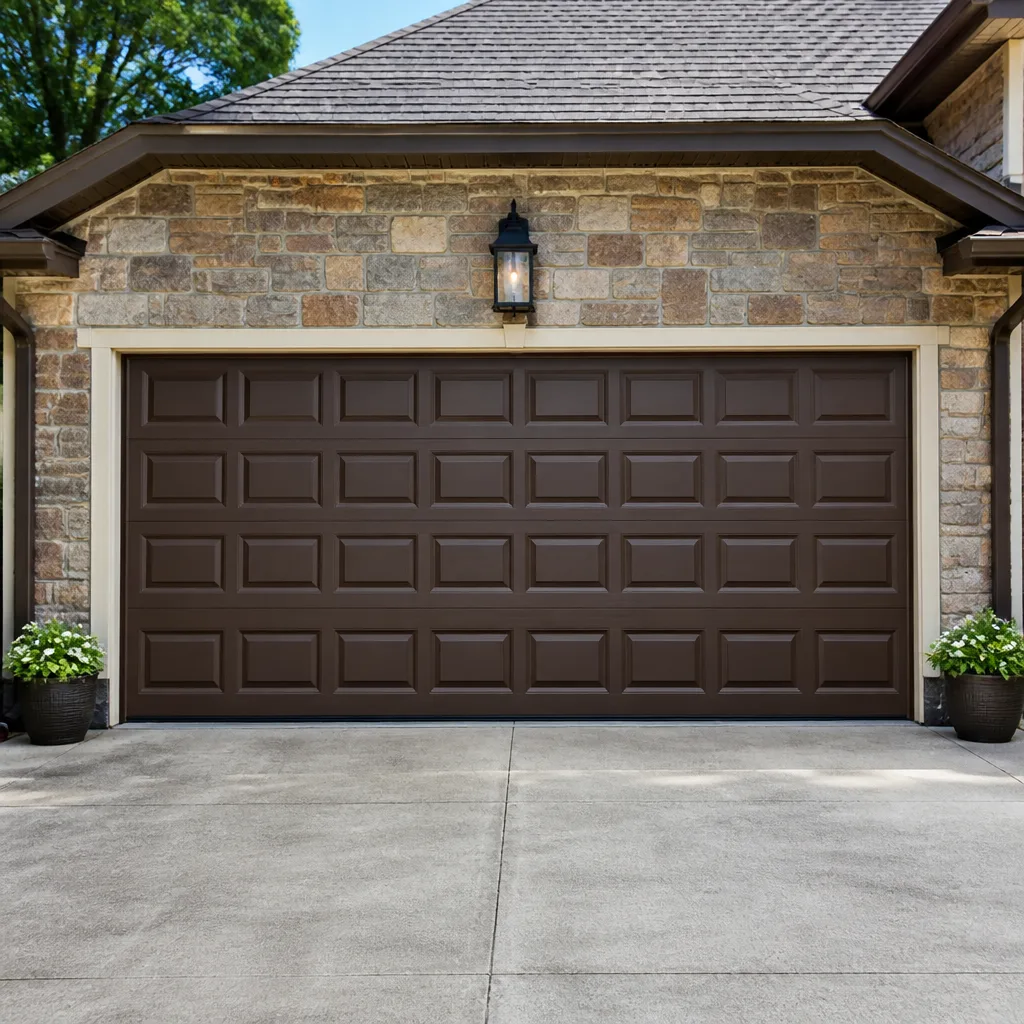 Raised-panel steel
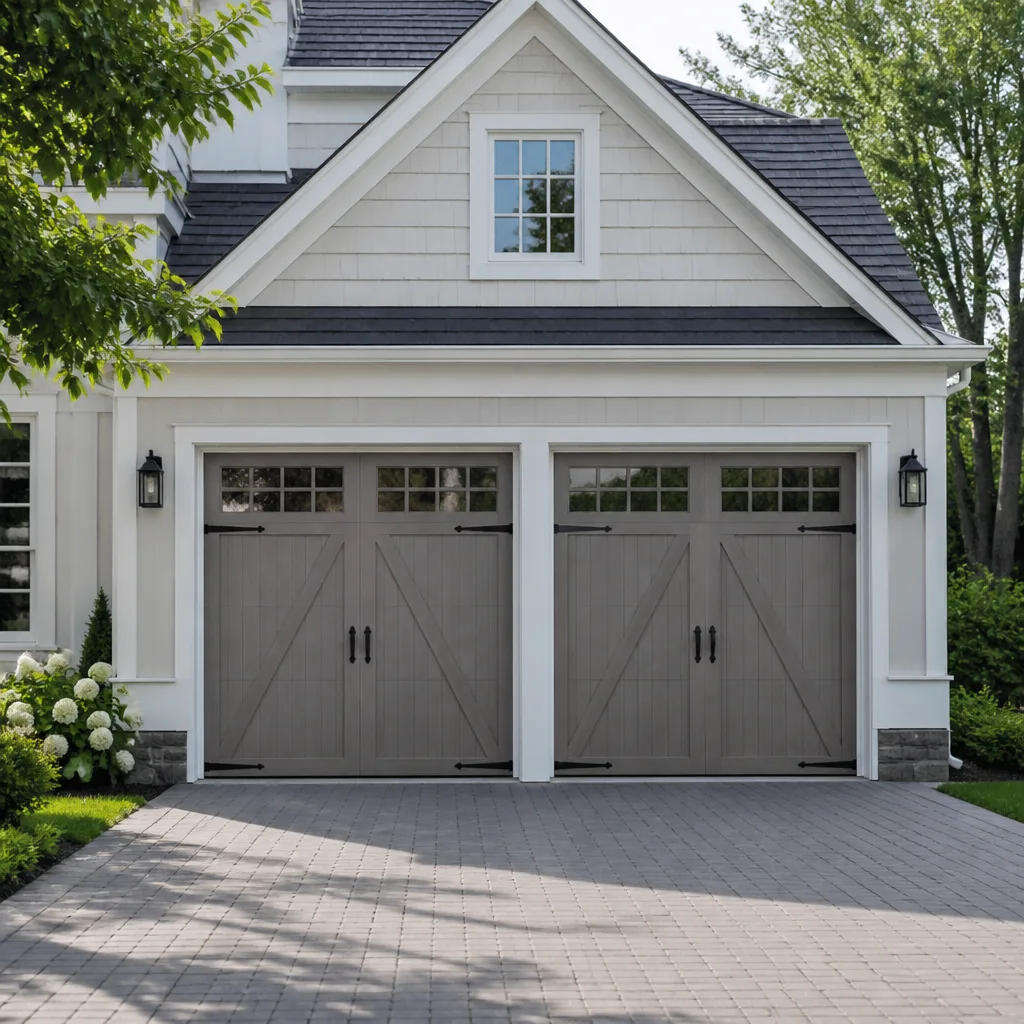 Carriage house
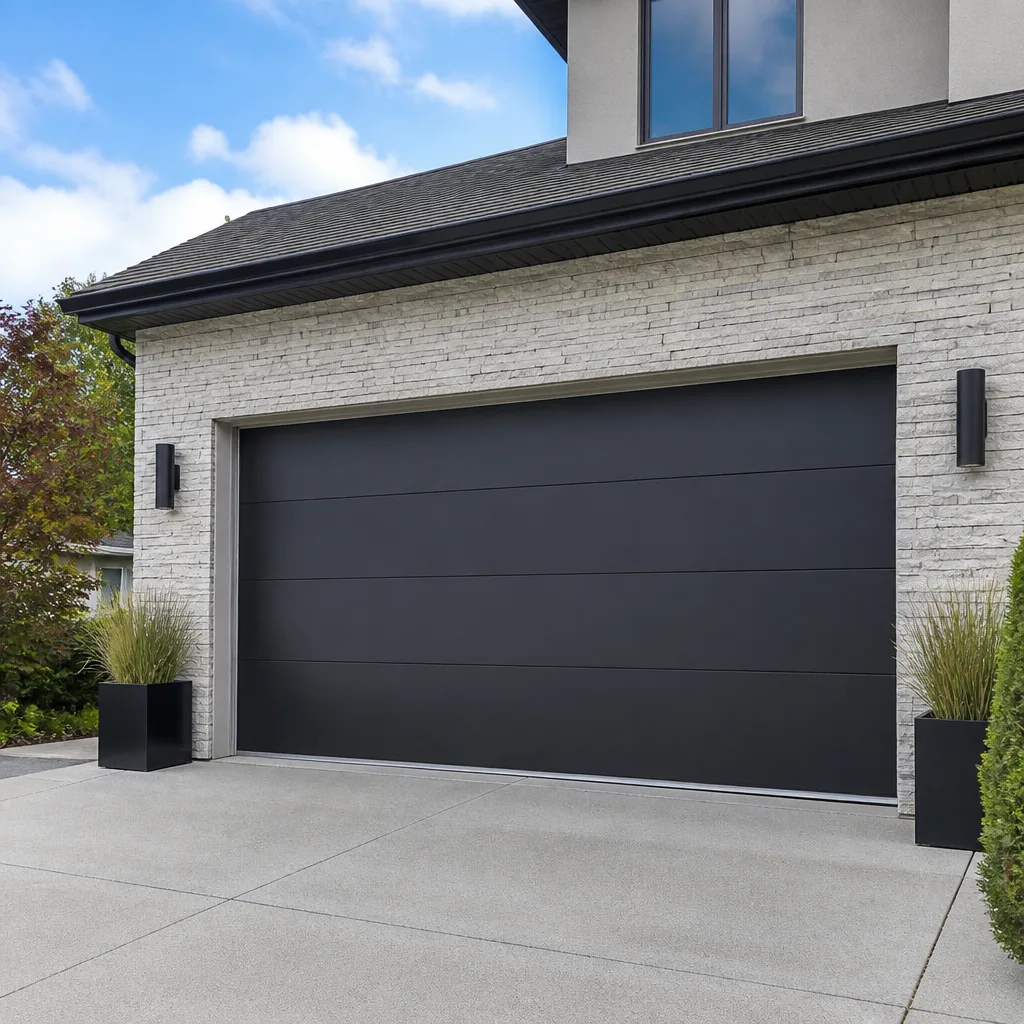 Modern flush
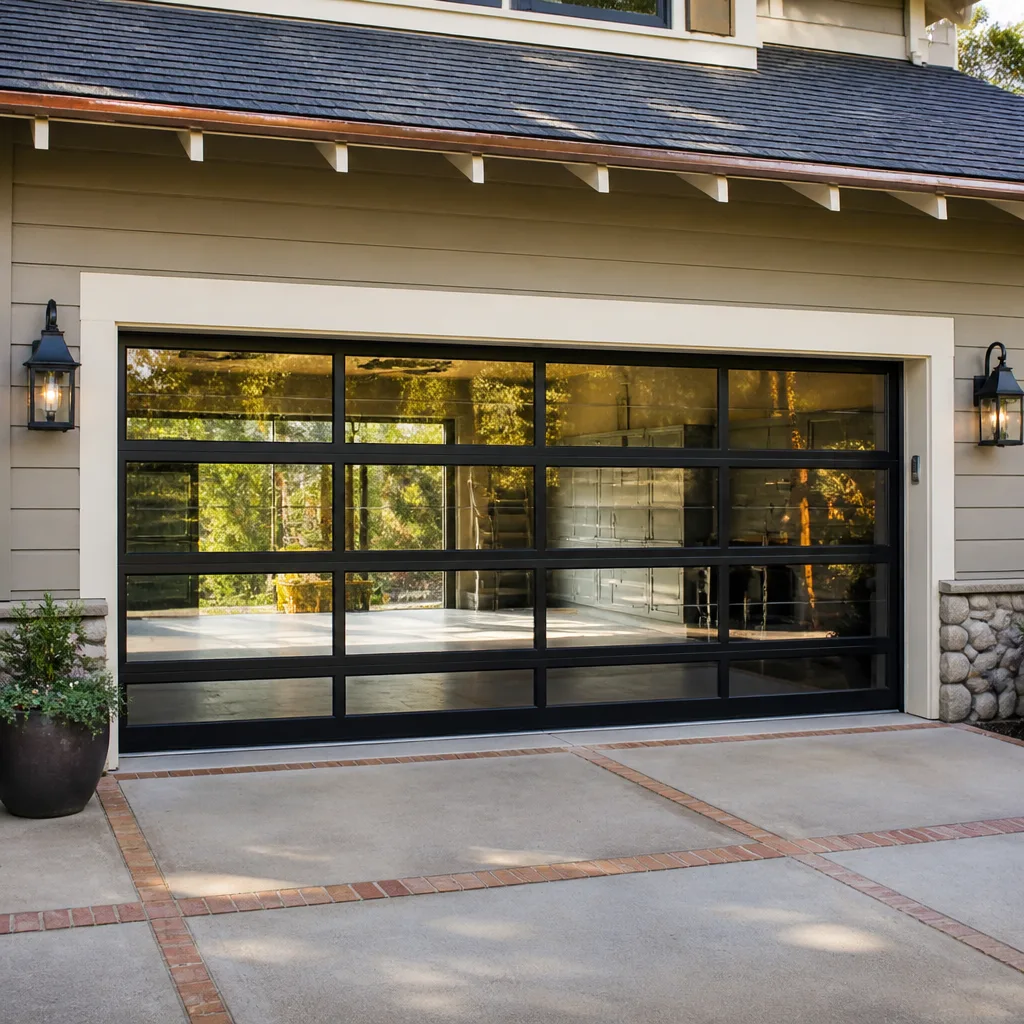 Full-view glass
 LiftMaster openers
 Chamberlain openers
Full 25-point door and opener safety check with every visit - springs, cables, rollers, tracks, and your LiftMaster or Chamberlain opener included
You get a price before we start. It does not change when the pro arrives.
Get your free estimateDIY vs Professional Garage Door: The Levittown Homeowner’s Decision Guide
Garage door torsion springs store enough energy to break a wrist or take out a tooth, yet most of a garage door’s routine upkeep is genuinely safe for a homeowner with a ladder and an afternoon. That’s the part nearly every DIY debate gets wrong. The real question isn’t whether you’re handy enough. It’s which specific tasks have an acceptable failure mode if you get them wrong, and which ones can hurt you or cost you more than the repair would have. This guide sorts the whole system task by task for Levittown homeowners, from a bottom seal you can swap in an hour to the spring you should never touch.
Quick Answer
About 70% of garage door maintenance is safe DIY work for a careful homeowner: lubricating hinges and rollers, replacing a bottom weatherseal, painting panels, reprogramming a remote, and realigning safety sensors. The rest is professional-only, and torsion spring replacement sits at the very top of that list. Springs, cables, and the high-tension hardware that holds the door up carry stored energy that can cause serious injury, and they should only be handled by a trained technician.
Styles & brands we work with
- Raised-panel steel
- Carriage house
- Modern flush
- Full-view glass
- LiftMaster openers
- Chamberlain openers
Table of Contents
- Green Zone: Garage Door Tasks You Can Safely Do Yourself
- Yellow Zone: DIY With Caution and the Right Tools
- Red Zone: Professional-Only Garage Door Work
- Why Spring Replacement Is a Hard Professional-Only Job
- How DIY Repairs Affect Your Manufacturer Warranty
- When a DIY Mistake Costs More Than the Professional Job
- Levittown Weather, Housing Stock, and Your Garage Door
- A Simple Decision Framework for Levittown Homeowners
Green Zone: Garage Door Tasks You Can Safely Do Yourself
These are the jobs where the worst realistic outcome is a non-working remote or a seal that needs redoing. No stored tension, no overhead weight, no risk of a finger in a moving joint. Any Levittown homeowner comfortable on a step stool can handle them with basic tools and a few minutes of attention.
Lubricating hinges, rollers, and tracks. A garage door is a machine with a lot of moving joints, and dry metal grinds. A silicone-based garage door lubricant on the hinges, roller stems, and the torsion springs themselves keeps everything quiet and slows wear. Avoid heavy grease on the tracks, since it collects grit and turns into a paste.
Replacing the bottom weatherseal. The rubber seal along the bottom of the door takes the most abuse of any part on the system. In Levittown, wet winters and hot, humid summers work that seal hard. It dries, cracks, and stops sealing, which lets rainwater, cold air, and the occasional mouse underneath. A replacement seal is inexpensive and slides into the retainer track on the bottom edge of the door. Measure the door width, buy the right profile, pull the old one, slide in the new one.
Painting or touching up panels. Cosmetic work on a steel door is well within reach. Clean the surface, scuff it lightly, prime if you’re going to a very different color, and paint. Do it before the rust spots at the bottom edge get a chance to spread.
Reprogramming a remote or keypad. Whether it’s a LiftMaster or a Chamberlain opener, the process is a few button presses on the motor head and the remote. The manual tells you the exact sequence. This is one of the most common “our opener is broken” calls we get, and it’s almost always a re-pairing job.
Operating the manual release. Knowing how to pull the red release cord to disconnect the door from the opener is a skill every homeowner should have. If the power goes out, you can still open the door by hand (carefully, with the door balanced). After you re-engage it, check that the door reconnects cleanly.
None of these touch the springs, the cables, or the door’s balance. That’s where the line falls. If you ever want a plain-language explanation of the whole system before you start, our garage door repair guide covers what each part does and how it fails.
Yellow Zone: DIY With Caution and the Right Tools
The middle tier is where a careful homeowner can still do the work, but a mistake has real consequences: a sensor that stops the door from closing, a track that bends and won’t come back, a stripped bolt. Slow down and use the right tools.
Aligning the safety sensors. The two small photo-eye sensors at the bottom of the track are what stop the door from crushing something in its path. Misaligned sensors are one of the most common reasons a door won’t close. A flashlight beam from one sensor to the other helps you see the alignment, and a gentle tap does the job. Don’t force them; the brackets bend and won’t spring back.
Replacing a remote or adding a keypad. Straightforward, but the opener’s learn button needs to be pressed and a code transmitted within a short window. If it doesn’t take the first time, wait a few minutes and try again. Fresh batteries in the remote are almost always part of the fix.
Tightening hinges and rollers. Loose bolts rattle and eventually back out. A socket wrench and a slow pass over every hinge and bracket fixes the sound. Don’t overtighten; you can crack the hinge leaf. And never loosen a bolt on anything attached to a cable or spring.
Adjusting the opener’s travel limits or force. Most openers let you adjust how far the door travels and how much force it uses. Small adjustments are fine, but if you find yourself dialing up the force to get the door to close, stop. That’s a symptom, not a fix. The door has a balance problem or the opener is struggling, and you should get it inspected.
Freeing a door stuck open during bad weather. If a storm coming through Levittown left the door open and the opener won’t respond, you can lower the door manually with the release cord engaged. Pull the release, lower the door slowly by hand, and re-engage it. Get help if the door is too heavy to handle easily; that heaviness is itself a sign the springs need attention.
If you’re a step further and the opener itself is failing, see our garage door opener repair page. It walks through the difference between a remote problem and a motor problem.
Red Zone: Professional-Only Garage Door Work
These tasks carry stored energy or overhead weight, and a mistake can injure you or damage the door beyond what a repair costs. Every one of them belongs to a trained technician, even if you consider yourself mechanically confident.
Torsion spring replacement. The single most dangerous job on a garage door. Never a DIY task. Covered in detail in the next section.
Extension spring replacement. Less dangerous than torsion by a wide margin, but the springs are under load, and the cables and pulleys in the assembly can snap. Still a professional job.
Cable replacement. The cables are the parts that actually hold the door up. They’re under hundreds of pounds of tension. A snap can whip with enough force to cause serious injury. Never touch a cable under tension.
Replacing panels or sections. Doors are engineered as a balanced system; swap one panel and the balance changes. A new panel that doesn’t match the weight of the old one can throw off the door and stress the opener.
Roller, drum, and bearing plate replacement on high-tension hardware. If the job requires removing the cable or releasing spring tension, it’s out of DIY scope.
Full door installation. Accurate measurement, proper track alignment, spring calibration, and safety sensor placement all matter for door performance and safety. A badly installed door can fall.
For a look at what a professional spring job actually involves, our garage door spring repair page details the parts and process. It’s the page we’d point a neighbor to before they ask “should I try this myself?”
Why Spring Replacement Is a Hard Professional-Only Job
A torsion spring on a typical residential door is wound tight enough to lift a door that weighs well over a hundred pounds. That energy is stored in the coil and stays there. When a winding bar slips or a spring breaks while you’re working, the release is violent. Even experienced technicians wear eye protection, keep their hands clear, and control the door’s weight with a winding bar. A homeowner with a set of screwdrivers and a YouTube video has none of that in place.
Here’s the second problem: the science of a spring replacement isn’t just “take the old one off and put a new one on.” Torsion springs are matched to the door’s weight. A spring with the wrong wire size or the wrong number of coils will either not lift the door or lift it wrong, which strains the opener, distorts the track, and shortens the door’s life. Sorting that out requires a scale, a spring chart, and experience reading it.
There’s also a safety catch: the cables. When a spring is replaced, the cables are re-tensioned and the drum has to be reset. A trained technician checks the whole assembly. The wrong sequence, or just a slip, can let the door fall.
What goes wrong when a homeowner tries it
- A winding bar slips. The most common outcome. Slipped bars can strike hands and faces with real force.
- The wrong spring size. A “close enough” spring doesn’t lift the door evenly, and the opener works harder than it’s designed to.
- The door gets out of balance. The bottom may sag or the door may travel crooked, which breaks the track and the opener over time.
- Cables get released too early. The door drops, and the frame, track, and panels take the damage.
There’s no version of a torsion spring replacement that’s safe without training. Our technicians have up to 9 years of experience across this exact job, and it’s the repair we treat with the most care on every call. It’s never the moment to save money.
How DIY Repairs Affect Your Manufacturer Warranty
Manufacturer warranties on garage doors and openers are specific documents. They differ by brand, model, and component, and the wording matters. In general, door makers like Clopay and Raynor and opener makers like LiftMaster and Chamberlain tie their warranties to a couple of things: professional installation, correct adjustment, and the door staying within its rated weight and balance. What voids coverage differs by product, and the fine print in your door or opener manual is the authority.
Here’s where homeowners get caught. Doing routine maintenance like lubrication or weatherseal replacement almost never affects a warranty. But disassembling the spring assembly, adjusting the opener’s internal force settings to compensate for a door that’s out of balance, or installing or adjusting a panel in a way that changes the door’s alignment can put you outside the coverage terms. The manufacturer may decline a claim on a part it believes was mishandled. Asking a question before you start is a lot cheaper than arguing about it after.
The bottom line: green-zone maintenance doesn’t touch your warranty. Red-zone work almost always does, and the risk is real.
When a DIY Mistake Costs More Than the Professional Job
The math here isn’t always obvious until the damage is done. A few scenarios make it clear.
DIY spring, then a dropped door. A homeowner saves the price of a professional spring job, then the door falls. Bent track, cracked panel, and often a damaged opener. What was a straightforward spring replacement becomes a much larger repair.
The wrong spring on a working door. A homeowner finds a spring at a big-box store that looks right and installs it. The door travels crooked, the opener works harder, and now the opener is failing too. The original problem was the spring; the new problem is the opener.
Force adjustment on a struggling door. The door won’t close all the way, so the homeowner turns up the opener’s force limit. The door closes crooked, breaks a roller, and the bottom panel chips. The real issue was a failing spring or a bent track, and now there’s a new problem on top.
Wrong-size panel. A homeowner replaces a damaged bottom panel with a panel that looks similar but weighs differently. The door’s balance drifts, and the opener and springs take the strain.
In all these cases the correct fix existed on the first call. The cheap repair turned into a longer one. The same is true for a door that looks fine but sounds wrong. If you hear grinding, popping, or a bang, that sound is your warning. Call and let someone look at it before you decide.
Levittown Weather, Housing Stock, and Your Garage Door
Levittown’s climate puts a specific kind of wear on garage door hardware. Hot, humid summers and cold winters mean the wood around the opening moves season to season, which stresses the frames and track bolts. Winter freezing loosens those fasteners. Wet snow packed under the door gets forced into the bottom seal, and repeated cycles take a toll on every moving part.
The neighborhood housing stock is another factor. The original Levittown homes were built around a specific era of construction, and their garages reflect it. A garage door on a house from that era sometimes carries a door system that’s already had parts replaced with non-matching hardware. It’s not unusual to find mismatched springs, an opener of a different brand than the door, or a bottom track that’s been bent and persuaded back into shape. That mix is exactly why a technician familiar with multiple brands makes a difference. We work on equipment from LiftMaster, Chamberlain, Genie, Clopay, Amarr, Wayne Dalton, Craftsman, and Raynor precisely because in a town like Levittown you’ll see every one of them on the same street.
Knowing the brand up front speeds diagnosis. A LiftMaster opener has different force limits and different error codes than a Craftsman unit, and the fix isn’t interchangeable. A door from one maker has different panel weights and adjustment points than another. That’s the main reason we work across eight brands: it’s the way real Levittown garages are actually equipped.
A Simple Decision Framework for Levittown Homeowners
Here’s the clearest way to sort any garage door task before you start. Ask one question: if this goes wrong, what’s the worst realistic outcome?
- Nothing worse than a non-working part, or a redo? Green zone. Read the manual and go.
- A misaligned door or a bent track, or a part you may have to replace twice? Yellow zone. Slow down, use the right tools, and stop if you’re not sure.
- Stored spring tension, a cable under load, or the risk of the door falling? Red zone. Call a professional.
- Unsure which zone a task falls in? That’s your answer. Call before you touch it.
It helps to know the specific part. Torsion springs, cables, drums, bearings, and the door’s balance are always red zone. Weatherseals, lubrication, sensors, remotes, and paint are green. Anything between needs judgment.
The single best habit: read the manual and the warranty before you start, and dial a phone if there’s any doubt. The call is free, and it protects the door.
Common Mistakes to Avoid
- Winding a spring without a winding bar. Screwdrivers, pliers, and hands-only attempts are how injuries happen. Spring winding requires proper bars and training, full stop.
- Loosening a bolt attached to a cable or spring. A lot of hardware is safe to touch; anything on the tension side is not. If you’re not sure which side a bolt is on, don’t touch it.
- Adjusting force limits to fix a door that’s out of balance. Turning up the force to get the door to close covers the real problem. The door will keep getting worse until the underlying spring or track issue is fixed.
- Buying a “close enough” spring at a big-box store. The wrong wire size or coil count makes the door work harder. Springs need to match the door weight, and a trained tech checks the weight first.
- Ignoring the sensor gap. A sensor that’s slightly out of alignment stops the door from closing. If your door reverses or won’t close, check the sensors before you assume the opener is dead.
- Loading up the bottom track with snow and ice. In Levittown winters, packed snow and ice in the bottom track bends the track and stretches the seal. Clear the bottom of the door after storms.
- Assuming a loud door is just a loud door. A grinding sound or a loud bang usually signals something on the red-zone list. Quiet the door with lubricant on the moving parts, not with wishful thinking.
- Skipping the manual on a keypad or remote. Reprogramming a Chamberlain or LiftMaster remote is a short sequence. Guessing at it can leave the opener in a learn state that won’t pair.
See the difference
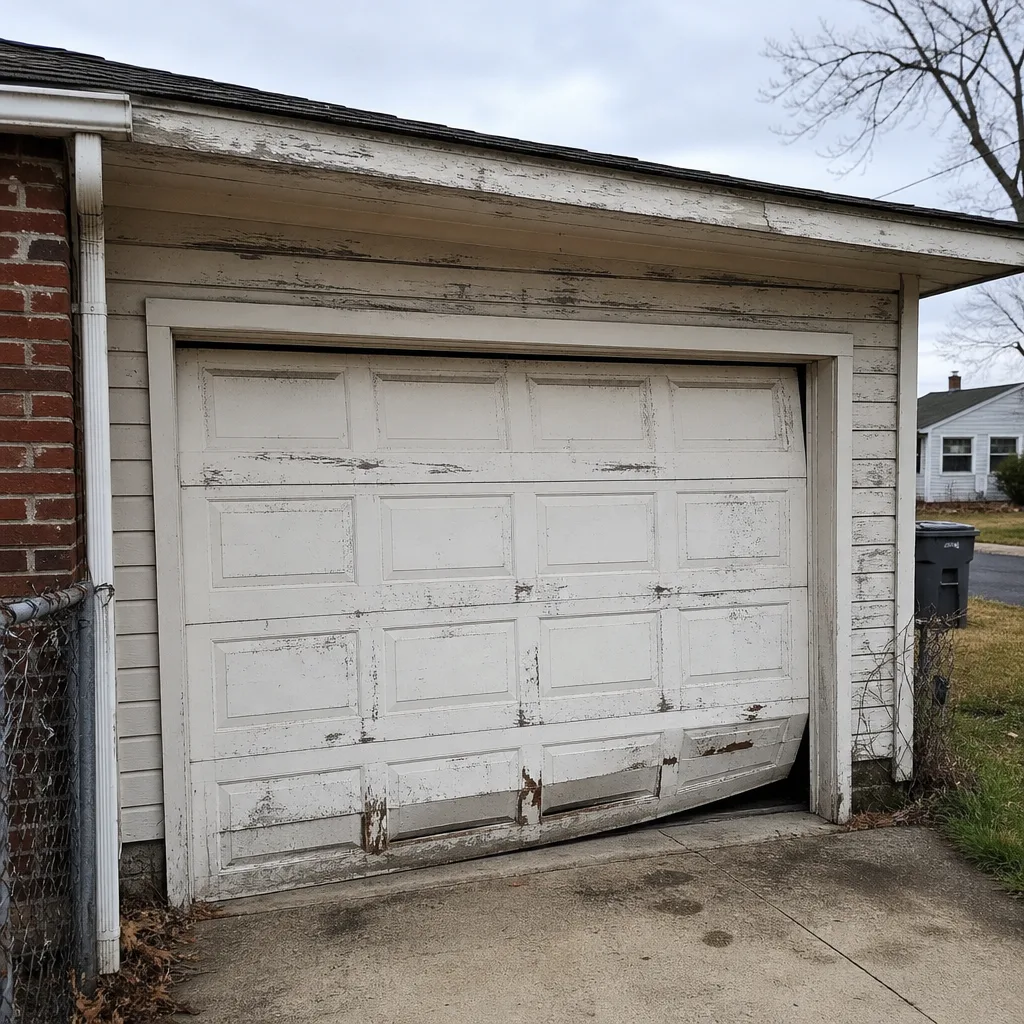 Before
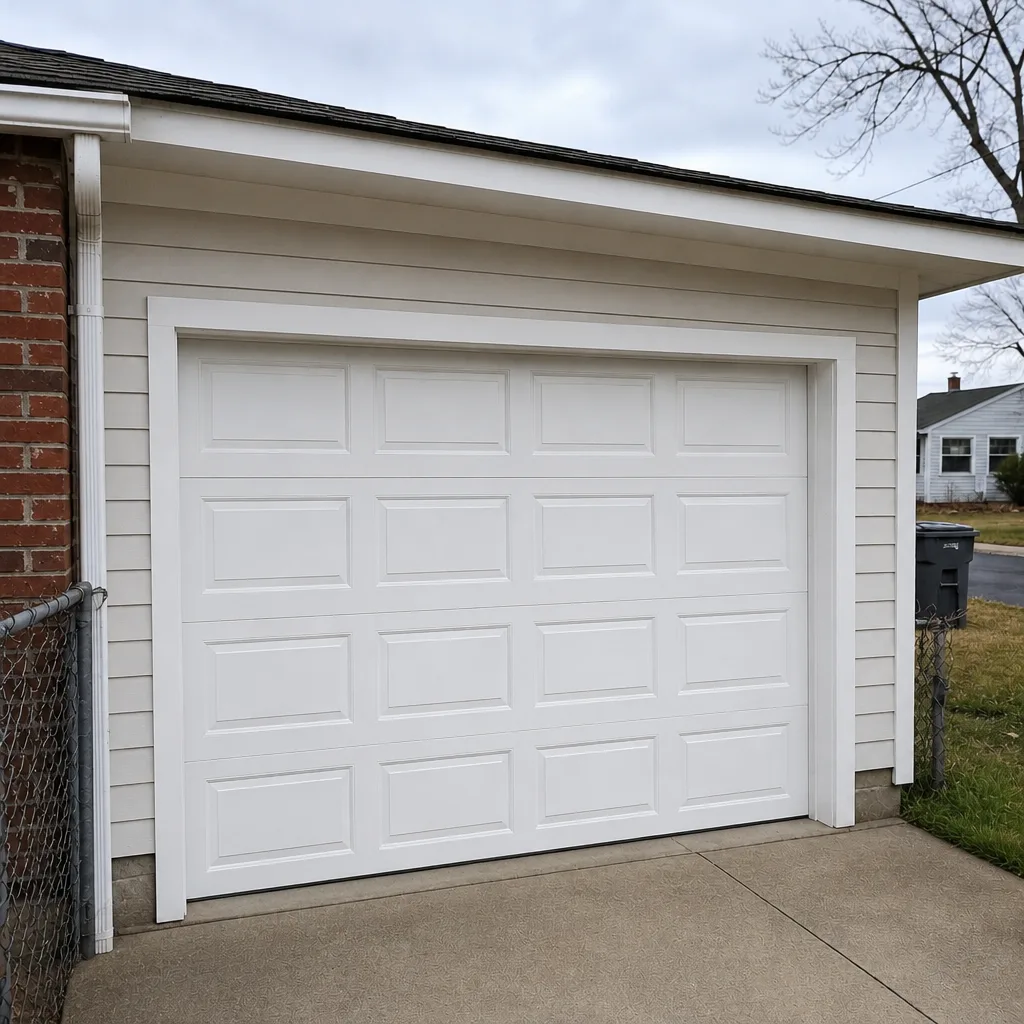 After
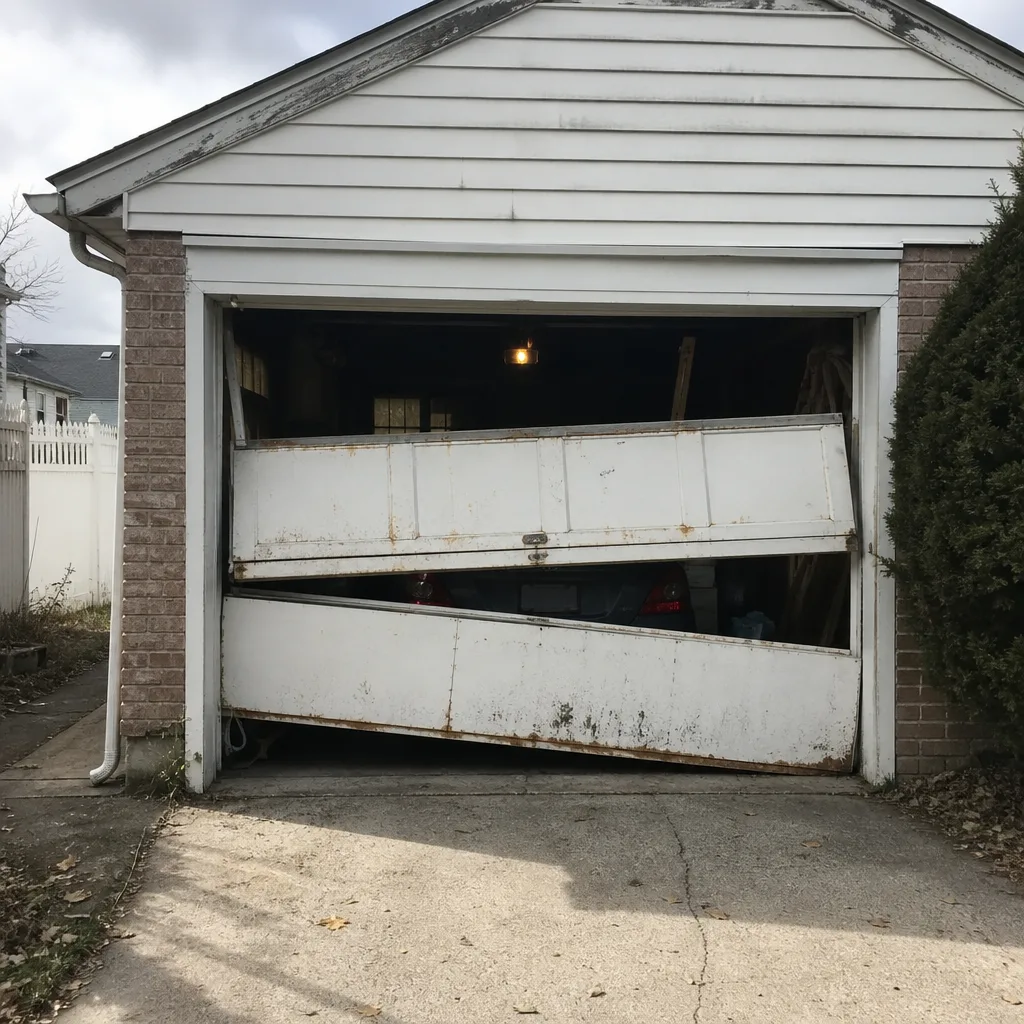 Before
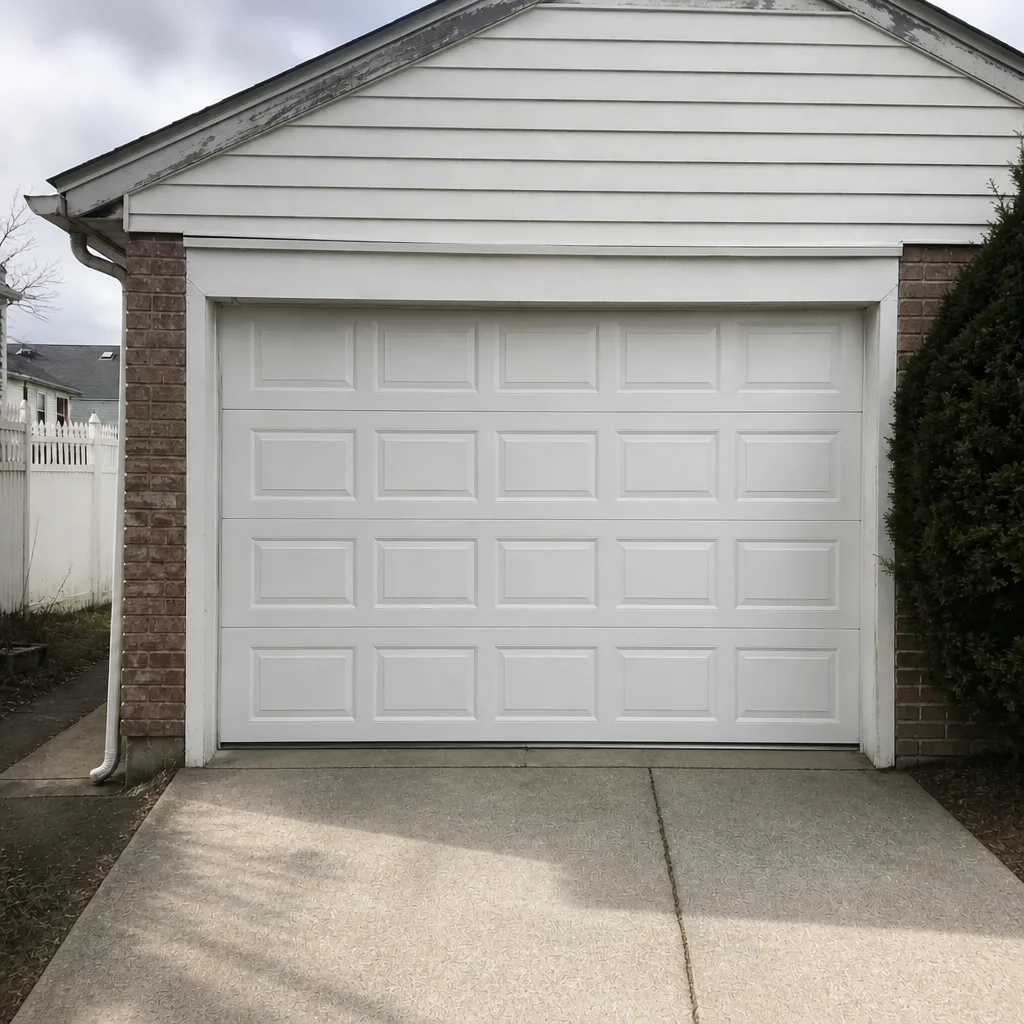 After
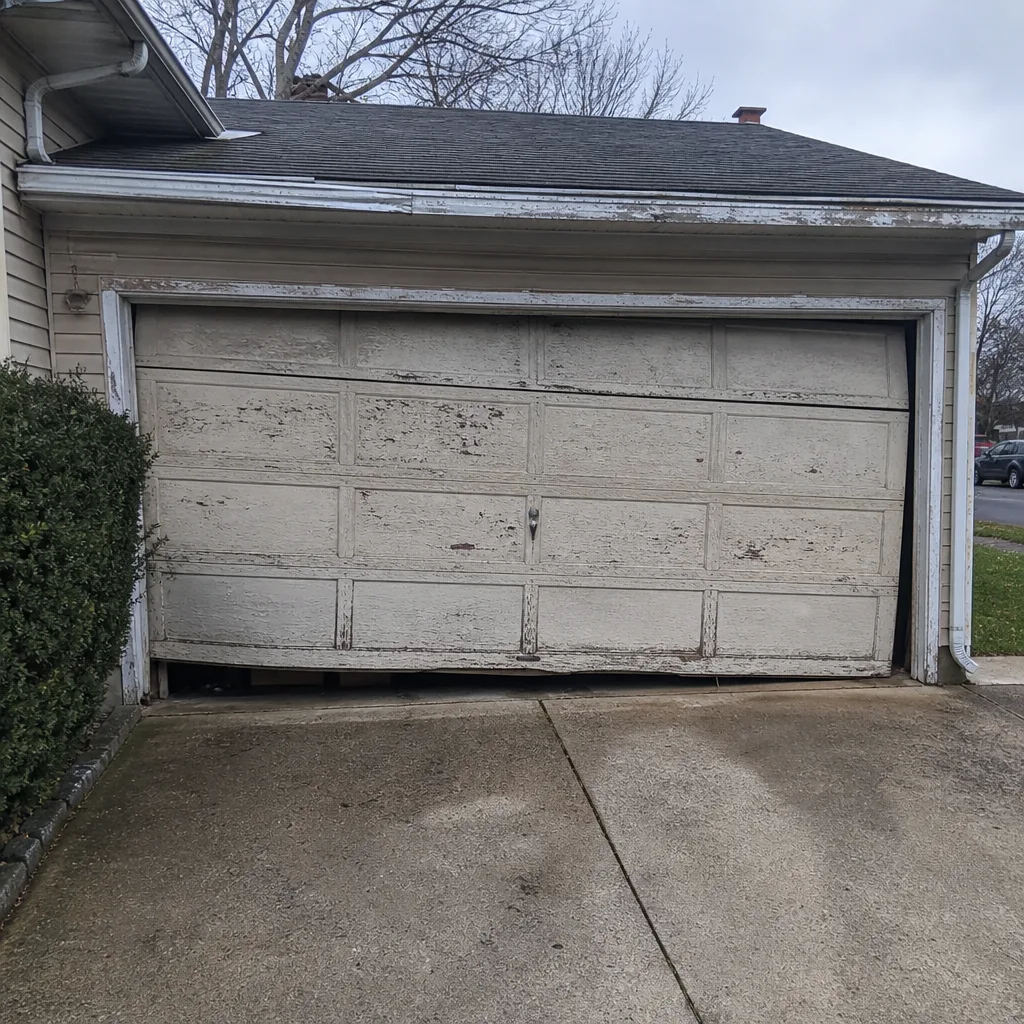 Before
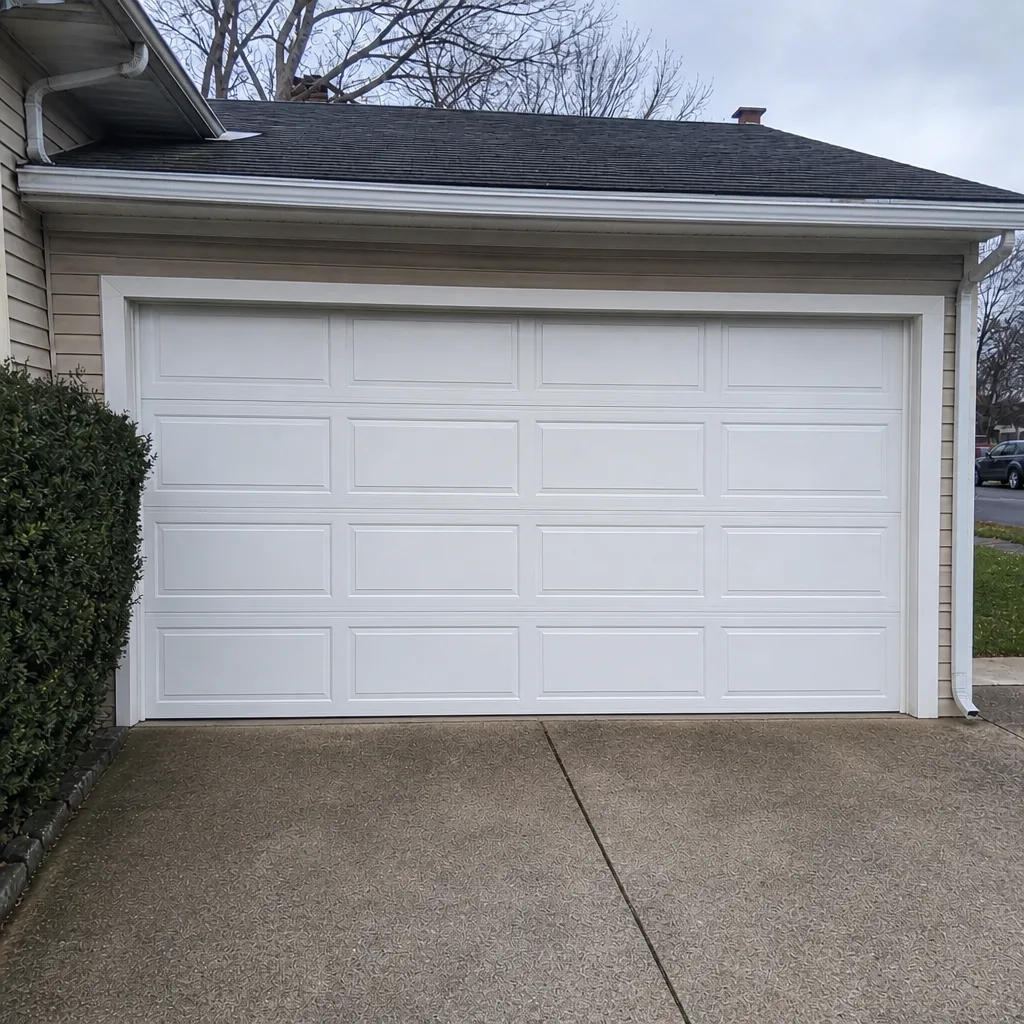 After
When to Call a Professional
Call a professional anytime the job touches a spring, a cable, or the door’s balance. That covers a loud bang from the overhead hardware, a door that’s suddenly much heavier or won’t hold open, a door stuck open in bad weather, and a collision with the car. Call when the opener makes a grinding noise, when the door travels crooked, when a safety sensor won’t stay aligned, and when you’re replacing a panel. Also call when a door you’ve owned for a decade suddenly behaves differently, because that change is the thing a technician can diagnose quickly. Our technicians have up to 9 years of experience, and we work across eight major brands so diagnosis starts from what your door is, not guesswork.
Garage Door Repair Levittown Pros offers free estimates in Levittown. Call (877) 792-5882 and we’ll take a look before you spend money on a DIY attempt that may cost more to undo.
Frequently Asked Questions
It’s a good idea for routine maintenance and a bad idea for springs, cables, and anything touching the door’s balance. Lubricating hinges, replacing a bottom weatherseal, painting panels, reprogramming a remote, and aligning safety sensors are safe DIY jobs for a careful homeowner. Torsion springs, extension springs, cables, drums, bearing plates, and panel replacement are not, and staying away from them protects you from injury and large repair bills.
Spring failures are one of the most common repair jobs we handle, and same-day service is often possible for a door that’s stuck and blocking your vehicle. Call (877) 792-5882 and we’ll tell you what’s available. Spring replacement is never a DIY job; the springs store enormous tension and can cause serious injury when a bar slips.
It can. Clopay, Raynor, LiftMaster, and Chamberlain warranties generally require correct installation and adjustment, and the fine print differs by product and component, so read your manual. Routine maintenance almost never affects coverage, but disassembling a spring or forcing the opener’s force limits to compensate for a balance problem can put you outside the terms. Call us before you start if you’re unsure.
A broken spring is usually obvious: the door won’t lift, it’s extra heavy, or there’s a loud bang from overhead. An opener problem shows up differently. It runs and doesn’t move the door, it hums without action, it stops halfway, or the remote doesn’t respond. If both symptoms show up at once, the springs are the likely cause and the opener is the symptom. Call (877) 792-5882 and we’ll diagnose it.
Yes. It’s one of the safest DIY jobs on the whole door. Measure the door width, buy a seal that matches the retainer profile on the door’s bottom edge, and slide the new seal into the track. It’s a step-stool job with no tension involved. If the door’s bottom edge has rust or bends under the seal, get it looked at first, because a bent retainer won’t hold a new seal in place.
A professional fix is almost always cheaper than fixing a DIY mistake. A dropped door can mean bent tracks and cracked panels, which costs far more than a spring replacement would have. We’ll quote an exact price on-site and free of charge so you know what you’re in for. Call (877) 792-5882.
The Bottom Line
The DIY vs. professional question on a garage door is really about failure modes. Lubrication, weatherseals, sensor alignment, remotes, paint, and manual release: safe for any careful homeowner, and worth doing yourself to save money and learn the system. Springs, cables, drums, tracks, panels, and balance: professional-only, every time, because the consequences range from injury to a repair bill that dwarfs the original job. In Levittown, our wet winters and humid summers shorten the life of the seal and put stress on moving parts, which is exactly why the green-zone maintenance is worth doing. When in doubt, or when a door starts sounding different, stop and call.
Our technicians have up to 9 years of experience and we work on equipment from LiftMaster, Chamberlain, Genie, Clopay, Amarr, Wayne Dalton, Craftsman, and Raynor. Whether it’s a broken spring, a failing opener, or a full new installation, one company handles it from the first call to the last check. Garage Door Repair Levittown Pros is here for both the routine and the unexpected.
Get a Free Estimate in Levittown
Spring failure, strange noise, or a door that won’t close, we’ll give you a clear look and a written price before any work starts. Emergency garage door service is available for urgent failures. Call (877) 792-5882 for a free estimate and let’s get your door moving again.
Written by the team at Garage Door Repair Levittown Pros.